 how-to
How to Style a Rental Apartment: 7 Steps
Table of Contents
- Why Styling a Rental Apartment Matters
- Step 1: Start with Renter-Friendly Wall Decor
- Step 2: Upgrade Your Lighting
- Step 3: How to Style a Small Living Room with Furniture
- Step 4: Add Textiles and Window Treatments
- Step 5: Implement Temporary Apartment Upgrades
- Step 6: Bring in Greenery and Natural Elements
- Budget-Tiered Styling for Every Renter
Last Updated: August 25, 2026
Why Styling a Rental Apartment Matters
Your rental apartment doesn't have to feel like a temporary holding pattern. The space you live in shapes your mood, productivity, and how you spend your free time, yet many renters resign themselves to beige walls and landlord-approved blandness. The truth is, you can transform a rental into a home that reflects who you are without risking your security deposit.
At Station Home Design, we understand that renters might feel their options are limited. They aren't. When you know how to style a rental apartment strategically, you get to live in a space that feels intentional rather than temporary.
Step 1: Start with Renter-Friendly Wall Decor
Your walls are the largest canvas in your apartment, and they're also the biggest source of anxiety for renters worried about losing deposits. Modern wall solutions let you add character without permanent damage.
Temporary wallpaper and wall decals
Peel-and-stick wallpaper has evolved dramatically. Quality temporary wallpaper adheres firmly but removes cleanly, leaving no residue or damage. The range is enormous: geometric patterns, botanical prints, textured finishes, even marble and wood effects. Application takes an afternoon for a single room. Measure twice, apply slowly, and smooth out air bubbles as you go.
Wall decals work similarly but offer smaller-scale impact. They're ideal if you want to test a bold color or pattern before committing to full wallpaper coverage.
Peel-and-stick gallery walls
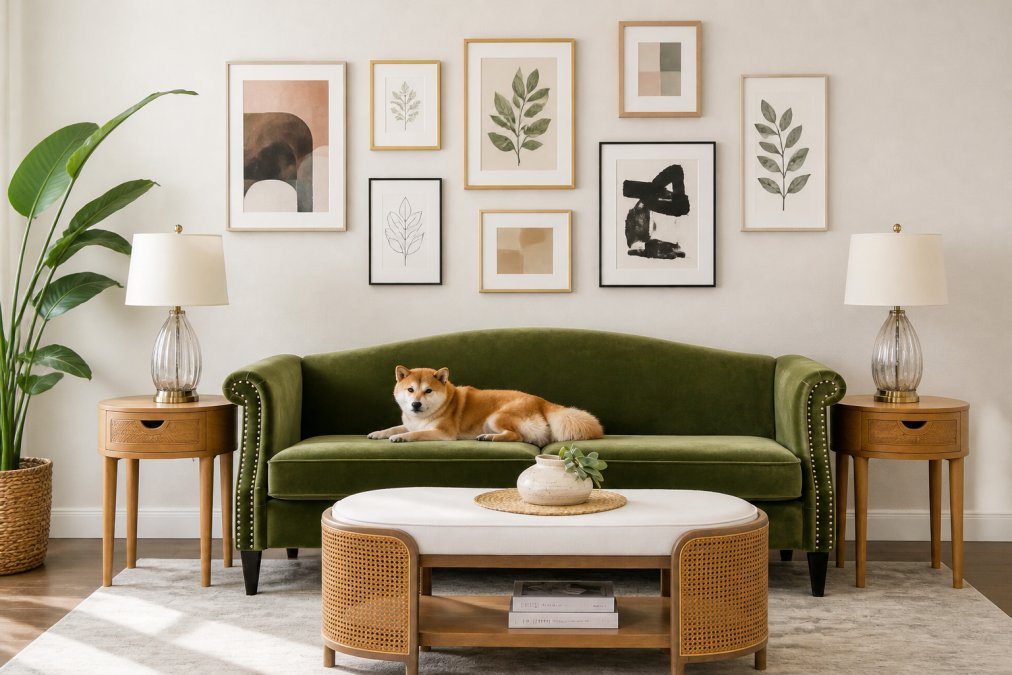
A gallery wall is the fastest way to add visual interest and personality to blank walls. Build your gallery wall around a theme: black-and-white photography, botanical prints, abstract art, or a mix of sizes and styles. Start with a central anchor piece, then work outward. Aim for 2-3 inches between frames. This approach lets you rearrange whenever you want.
Step 2: Upgrade Your Lighting
Lighting is the fastest way to change how a space feels. Most rental apartments come with builder-grade ceiling fixtures that cast harsh, unflattering light. Upgrading doesn't require rewiring.
Layered lighting is your goal. Combine ambient light (ceiling), task light (desk or reading), and accent light (lamps, string lights, or wall sconces). Swap out ceiling bulbs for warm-toned LED bulbs (2700K color temperature) (energy.gov). Add table lamps on side tables, a floor lamp in corners, and consider adhesive wall sconces for accent lighting without drilling. String lights or neon signs add personality and warmth while remaining completely removable.
For renters, plug-in pendant lights and track lighting offer drama without installation. These create focal points and define zones in open-concept layouts.
Step 3: How to Style a Small Living Room with Furniture
Furniture arrangement is where most people struggle in rental apartments. The solution isn't buying more pieces, it's understanding how to arrange what you have.
Choose multi-functional pieces
In a small living room, every piece needs to earn its place. A sofa that's also a bed, a coffee table with storage, a bookshelf that doubles as a room divider, these pieces do double duty without taking up extra space.
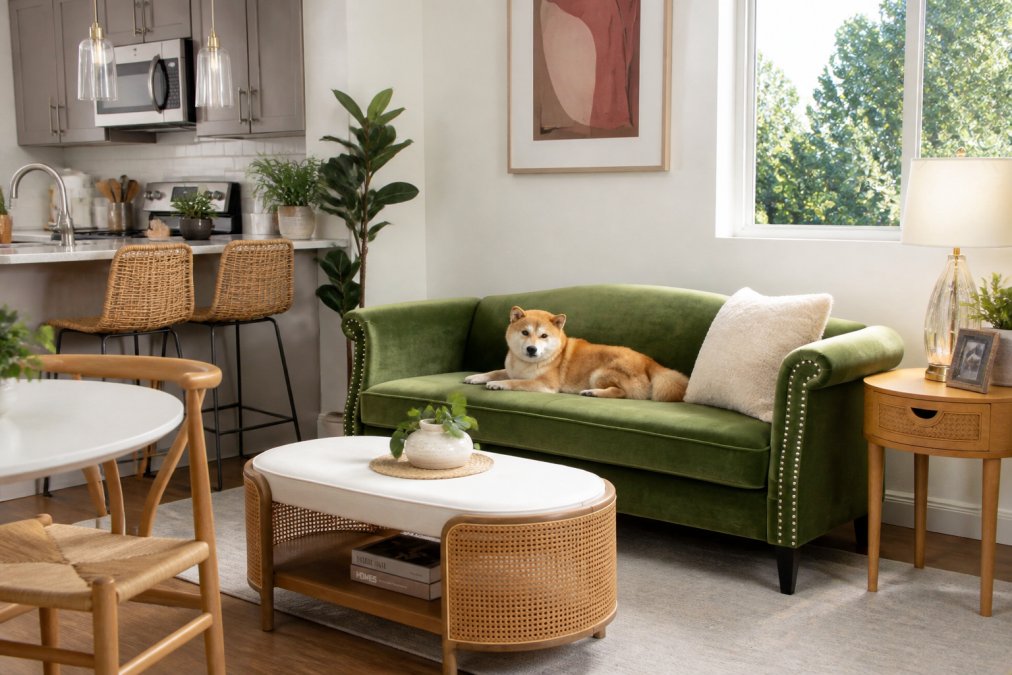
The Elaine 77" Camel Back Small Space Sofa in Olive is designed specifically for this challenge. It's compact enough for tight spaces but scaled generously enough to seat three people comfortably. The camelback design adds visual interest and elegance without the bulk of a sectional.

Pair your sofa with pieces that serve multiple purposes: ottomans with hidden storage, nesting tables you can expand or collapse, wall-mounted shelving that provides storage without floor footprint. A round coffee table, like the Small Apartment Living Room Round Household Minimalist Mini Table, takes up less visual space than a rectangular option while providing the same functionality.

Arrange your floor plan strategically
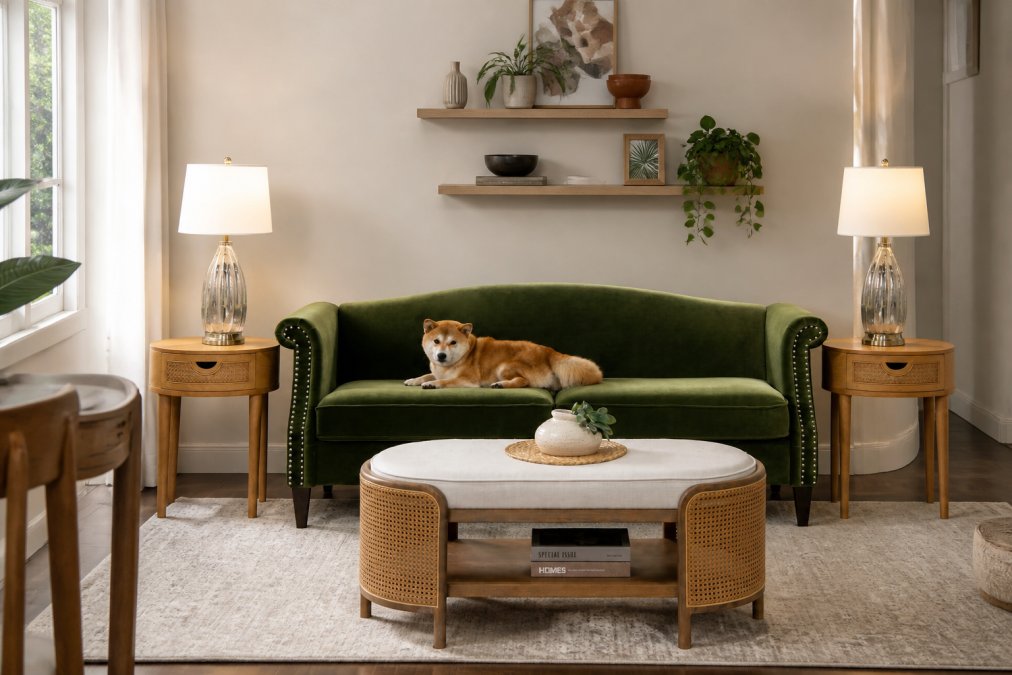
Start by identifying your focal point, usually a window, TV, or fireplace. Arrange seating to face that focal point rather than the walls.
Float your furniture away from walls. This sounds counterintuitive in a small space, but it actually makes the room feel larger and more intentional. A sofa pulled out from the wall, with a console table behind it, creates zones and definition without cramping the layout.
Create a clear traffic path from the entry to other rooms. Use vertical space aggressively. Tall bookcases, floating shelves, and wall-mounted storage draw the eye upward, making ceilings feel higher. The Jurgen Bookshelf in Antique White & Black adds storage and visual height without consuming floor space.

Step 4: Add Textiles and Window Treatments
Textiles are where renters can add warmth, personality, and functional benefits without commitment. Throw pillows, area rugs, curtains, and blankets transform a space and are completely portable.
Window treatments: Light control, privacy, and sound management
Window treatments do triple duty: they control light, manage privacy, and reduce outside noise. Tension rods and adhesive tracks let you hang curtains without drilling into walls or damaging the frame. Installation takes minutes and removal leaves zero damage.
Fabric weight matters. Sheer curtains soften harsh natural light while maintaining privacy during the day. Thermal or blackout curtains block 95% of light and provide significant sound dampening (peer-reviewed research). Layering is the renter's secret weapon: combine sheer curtains with a heavier outer curtain on a tension rod for flexibility and functionality.
When choosing curtains, measure from the ceiling to the floor. Floor-length curtains make ceilings appear higher and create a more intentional, finished look.
Throw pillows and blankets: Texture, comfort, and visual cohesion
Throw pillows are the fastest way to add color, pattern, and personality without commitment. Build a color palette first. Choose 2-3 main colors and 1-2 accent colors. All your pillows should work within this palette, creating visual cohesion.
Vary size and texture. Mix large square pillows (20-24 inches) with smaller rectangular lumbar pillows (12×20 inches). Combine textures: linen, velvet, wool, cotton, and faux fur. On a sofa, anchor corners with larger pillows, then layer smaller pillows in front.
Throw blankets serve both aesthetic and functional purposes. Drape one over the arm of your sofa or the foot of your bed. Choose blankets in neutral tones or colors that complement your pillow palette.
Area rugs: Defining zones and anchoring furniture
Area rugs define spaces, anchor furniture arrangements, and add warmth to hard flooring. A rug should be large enough that at least the front legs of your sofa and chairs sit on it. In a living room, aim for a rug that's at least 5×8 feet; in a bedroom, 5×7 or 6×9 feet (the American Academy of Dermatology).
Layering rugs is a professional design trick renters can use. Place a larger neutral rug as your base, then layer a smaller patterned rug on top. Material considerations: Wool or wool-blend rugs are softer, more durable, and provide better acoustic dampening than synthetic options. Avoid light-colored rugs in high-traffic areas, they show dirt and stains quickly.
Rug pads are essential. A non-slip rug pad prevents tripping hazards, protects your flooring from stains and wear, and keeps the rug from bunching up.
Step 5: Implement Temporary Apartment Upgrades
Beyond decor, renters have access to clever upgrades that transform functionality and comfort without permanent changes.
Storage solutions for small spaces
Under-bed storage containers are invisible but transformative. Clear plastic containers let you see contents without opening them. Over-the-door organizers add storage to doors you already have. Wall-mounted shelving with adhesive strips or command hooks adds storage without drilling into walls. Freestanding bookcases define spaces and provide storage without permanent installation.
Vertical storage is essential in small spaces. Use wall space above desks, beds, and entryways for shelves, hooks, and organizers. Clear storage containers let you see what you have without creating visual chaos.
Acoustic and soundproofing hacks: Reducing noise without permanent installation
Rental apartments often have thin walls and noisy neighbors. While you can't install permanent soundproofing, you can reduce noise transmission significantly with strategic placement of textiles, furniture, and materials.
Heavy curtains and drapes are your first line of defense. Curtains absorb sound from outside and reduce sound transmission into adjacent units. Hang curtains from ceiling to floor and keep them closed, especially at night.
Bookshelves against shared walls reduce noise transmission between apartments. A tall, full bookcase filled with books acts as a sound barrier. Position bookcases against the wall where you hear the most noise.
Area rugs and thick carpeting dampen sound from footsteps and movement. A thick rug with a quality rug pad underneath absorbs impact noise and reduces sound transmission to the unit below.
Tapestries and wall hangings add both acoustic benefit and visual interest. Heavy fabric tapestries hung on walls absorb sound and reduce echo. Hang them with adhesive hooks or command strips.
Soft furnishings throughout the space contribute to overall sound absorption. Upholstered furniture, throw blankets, pillows, and curtains all absorb sound. Rooms filled with soft furnishings are naturally quieter than rooms with hard surfaces.
White noise machines or apps mask disruptive sounds without requiring permanent installation. A fan, white noise machine, or white noise app can mask neighbor noise, traffic, or other ambient sounds.
Door seals and weatherstripping reduce sound transmission under doors. Adhesive weatherstripping around bedroom and bathroom doors seals gaps where sound travels.
Acoustic panels are a more aggressive option if you're dealing with significant noise. Fabric-wrapped acoustic panels can be hung on walls with adhesive strips or command hooks. Use them strategically in problem areas rather than covering entire walls.
What NOT to do: Avoid cheap foam padding or egg-crate foam. Avoid permanent solutions like caulking cracks or sealing gaps, these damage walls and violate lease agreements. Soundproofing is cumulative; layering multiple strategies creates noticeable improvement.
Step 6: Bring in Greenery and Natural Elements
Plants improve air quality, add life to a space, and genuinely make you feel better. Pothos, snake plants, ZZ plants, and peace lilies survive in low light and irregular watering. Place them on shelves, hang them from ceiling hooks, or use tall planters as floor-level accents that define spaces.
Bring in natural materials beyond plants: wood shelving, woven baskets, stone or ceramic accents. These elements add warmth and texture while connecting your interior to the natural world.
Natural light matters too. If your apartment gets good sunlight, maximize it. Keep windows clear of heavy curtains during the day, use mirrors to reflect light deeper into the space, and position seating to take advantage of natural brightness.
Budget-Tiered Styling for Every Renter
How you style a rental apartment depends partly on your budget. Meaningful transformation doesn't require spending thousands.
Under $500: Focus on textiles, wall decor, and lighting. Peel-and-stick wallpaper, adhesive hooks, gallery wall frames, warm bulbs, and throw pillows deliver immediate impact. Add plants and rearrange furniture strategically.
$500-$1,500: Add a quality sofa or key furniture piece, upgrade window treatments, invest in area rugs, and layer in accent lighting. The Cloud Boneless Loveseat Sofa offers affordable comfort and modern style. You're building a foundation of quality pieces that anchor your space.
$1,500-$3,000: Invest in a statement sofa like the Elaine, add a bookshelf for storage and style, upgrade all window treatments, layer in quality textiles, and create intentional lighting. You're choosing pieces that will move with you to future apartments and homes.
$3,000+: Build a fully coordinated space with quality furniture, professional-grade textiles, upgraded lighting, wall treatments, and accessories. You're creating a home that feels complete and intentional.
The key at any budget level: prioritize what matters most to you. If you spend significant time in your living room, invest there. If natural light and views matter, focus on window treatments and lighting. If you work from home, prioritize your workspace. Strategic spending beats spreading dollars thin across everything.
Styling a rental apartment is about claiming ownership of your space without overstepping the boundaries of your lease. It's about understanding that temporary doesn't mean temporary-looking. Station Home Design's thoughtfully curated collection helps you build spaces that feel intentional and personal, with pieces that work across different apartments and seasons. Start with one area, your wall decor, your seating, your lighting, and expand from there. Your apartment will thank you, and your security deposit will be safe.
Frequently Asked Questions
Q: How do I style a rental apartment without damaging the walls or losing my security deposit?
A: Stick to damage-free, removable solutions: peel-and-stick wallpaper, adhesive hooks, command strips, and tension rods. Avoid permanent fixtures, nail holes, and paint. These renter-friendly wall decor options let you personalize your space while keeping your security deposit safe. Always test adhesives on a small, inconspicuous area first.
Q: What's the best way to make a small rental apartment look bigger?
A: Use mirrors to reflect light and create depth, choose multi-functional furniture that doesn't overwhelm the space, and arrange your floor plan to maximize flow. Light, neutral textiles and vertical storage draw the eye upward. Layered lighting, lamps, overhead fixtures, and accent lights, adds dimension without cluttering. These tactics work whether you're styling a small living room or entire apartment.
Q: Can I change the flooring or cover ugly floors in a rental?
A: You can't replace flooring, but you can cover it. Large area rugs, peel-and-stick vinyl tiles, or removable floor decals hide stains and worn spots without violating your lease. Rugs also add warmth and define spaces in open layouts. Check your lease first, but most landlords approve temporary, non-permanent floor coverings.
Q: What are the best renter-friendly lighting solutions?
A: Swap out harsh overhead bulbs for warm LED alternatives, add floor and table lamps for layered lighting, and use clip-on lights or string lights to create ambiance. Avoid hardwired fixtures. Smart bulbs let you adjust color temperature and brightness without installation. Good lighting transforms any rental and costs far less than furniture upgrades.
This article was written using GrandRanker
Frequently Asked Questions
Q: How do I style a rental apartment without damaging the walls or losing my security deposit?
A: Stick to damage-free, removable solutions: peel-and-stick wallpaper, adhesive hooks, command strips, and tension rods. Avoid permanent fixtures, nail holes, and paint. These renter-friendly wall decor options let you personalize your space while keeping your security deposit safe. Always test adhesives on a small, inconspicuous area first.
Q: What's the best way to make a small rental apartment look bigger?
A: Use mirrors to reflect light and create depth, choose multi-functional furniture that doesn't overwhelm the space, and arrange your floor plan to maximize flow. Light, neutral textiles and vertical storage draw the eye upward. Layered lighting—lamps, overhead fixtures, and accent lights—adds dimension without cluttering. These tactics work whether you're styling a small living room or entire apartment.
Q: Can I change the flooring or cover ugly floors in a rental?
A: You can't replace flooring, but you can cover it. Large area rugs, peel-and-stick vinyl tiles, or removable floor decals hide stains and worn spots without violating your lease. Rugs also add warmth and define spaces in open layouts. Check your lease first, but most landlords approve temporary, non-permanent floor coverings.
Q: What are the best renter-friendly lighting solutions?
A: Swap out harsh overhead bulbs for warm LED alternatives, add floor and table lamps for layered lighting, and use clip-on lights or string lights to create ambiance. Avoid hardwired fixtures. Smart bulbs let you adjust color temperature and brightness without installation. Good lighting transforms any rental and costs far less than furniture upgrades.