
 how-to
How to Mix Furniture Styles: A Practical Guide
Table of Contents
- Start with the 80/20 Rule of Design
- Establish a Unifying Element
- Master Mixing Wood Tones in Furniture
- Balance Scale and Proportion
- Eclectic Interior Design Tips for Layering Styles
- How to Balance Furniture Styles in Small Spaces
- Common Mistakes to Avoid When Mixing Styles
- Conclusion
Last Updated: August 27, 2026
Start with the 80/20 Rule of Design
The 80/20 rule of design is the principle that approximately 80% of your space should feature a cohesive, foundational aesthetic, while the remaining 20% allows for contrasting or complementary styles (asid.org). This framework prevents your room from feeling chaotic while still giving you permission to experiment.
Think of it as your design safety net. When you commit to a dominant style, whether that's mid-century modern, rustic, or minimalist, you create visual harmony that makes the space feel intentional rather than accidental. The 20% becomes your playground, where you introduce that vintage industrial piece, the eclectic art, or the contemporary accent furniture that tells your story.
At Station Home Design, homeowners who start with this principle end up with spaces that feel curated rather than cluttered. The 80/20 approach works because it respects a fundamental truth about human perception: our brains crave patterns and predictability, but we also need just enough surprise to stay interested.
Here's the practical application: identify your dominant style first. What aesthetic speaks to you most? Modern, rustic, transitional, or something else entirely? Once you've locked that in, you have a framework for every furniture purchase and design decision that follows. The remaining 20% is where you layer in personality, the pieces that make your space uniquely yours.
Establish a Unifying Element
A unifying element is a design feature, color, material, texture, or style, that appears repeatedly throughout your space to create visual cohesion. Without it, even well-chosen pieces feel disconnected, like they wandered into your room from different homes.
The most effective unifying elements are those you naturally gravitate toward. For some people, it's warm wood tones that appear in flooring, furniture, and accents. For others, it's a specific color palette, think warm neutrals with sage green accents, or deep charcoal with brass hardware. The element you choose becomes the thread that ties everything together.
Consider establishing a unifying element through materials and finishes. A rustic-industrial aesthetic might use weathered wood paired with metal accents, creating immediate visual coherence. A contemporary space might unify through polished surfaces and clean lines. When you repeat these design languages across different furniture pieces, they stop feeling random and start feeling intentional.
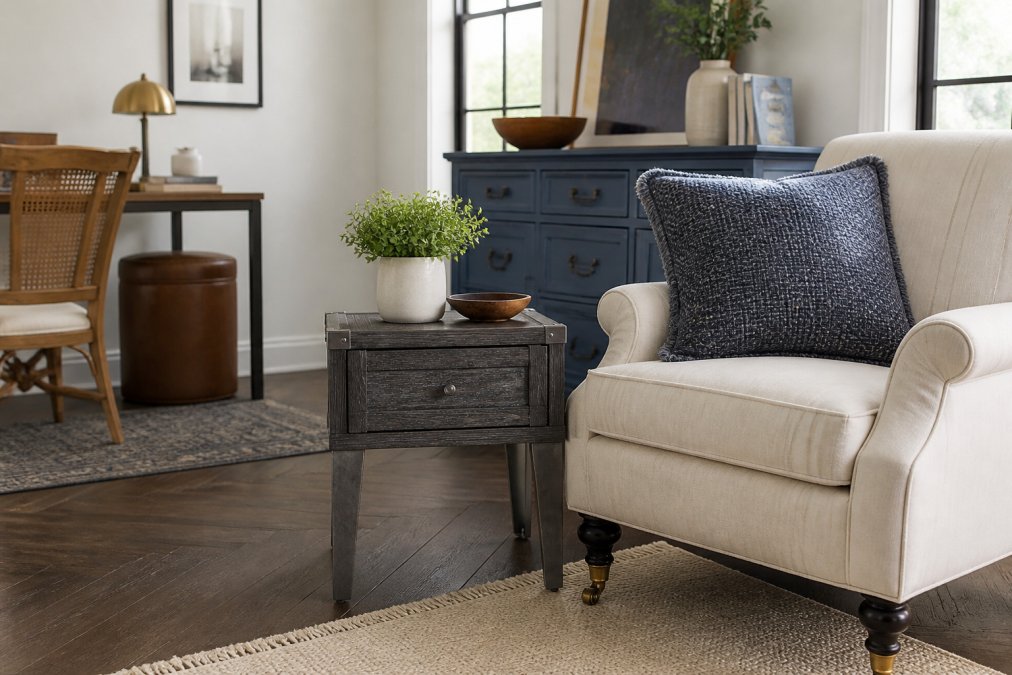
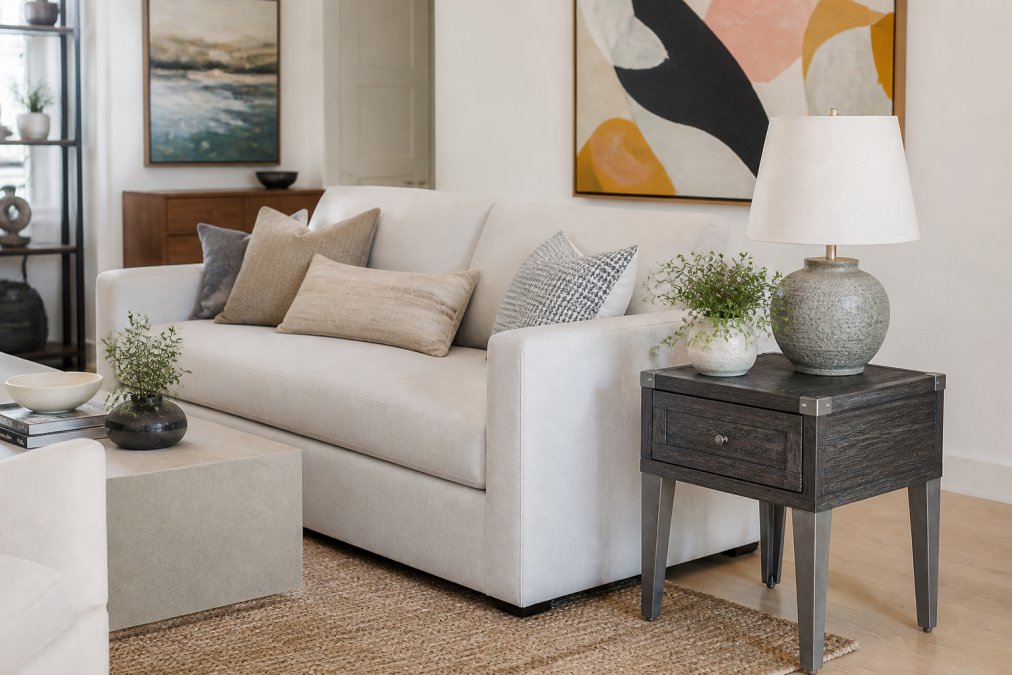
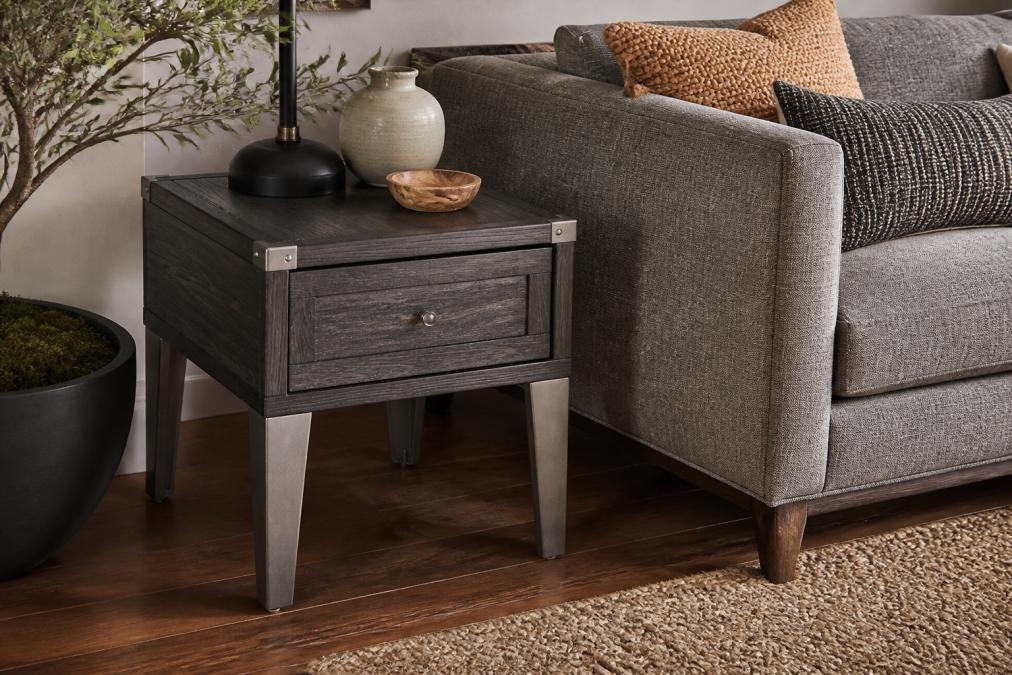
The Todoe Rectangular End Table in Dark Gray demonstrates this principle perfectly, its mixed materials (weather-washed pine wood contrasted with metal legs and corner bracket accents) create a unifying rustic-industrial aesthetic that works across multiple style combinations. When you introduce similar material combinations elsewhere in your room, the space gains instant sophistication.

Master Mixing Wood Tones in Furniture
Mixing wood tones in furniture is one of the most effective ways to create visual interest while maintaining a cohesive look. The key is understanding that wood tones exist on a spectrum, from light blonde and honey tones to warm medium browns to deep espresso and ebony finishes, and that successful combinations follow predictable patterns.
The most accessible approach is the warm-to-warm strategy. If your dominant wood tone is warm honey or medium oak, introduce secondary pieces in deeper warm browns or weathered finishes. This creates natural harmony because the undertones align. A contemporary sofa with warm wood legs pairs beautifully with a rustic coffee table in a deeper warm finish because both pieces speak the same color language.
Cool-toned woods (grays, silvers, whitewashed finishes) follow the same logic. Weathered gray and white-washed woods create a cohesive transitional aesthetic when used together. The Havalance Console Sofa Table in Gray/White exemplifies this approach, its distressed two-tone treatment blends weathered gray with vintage white, creating an utterly charming effect that works across multiple style combinations.

The mistake most people make is random mixing without intention. Pairing warm honey wood with cool whitewashed wood creates visual tension that feels unresolved rather than eclectic. The solution is simple: establish your dominant wood tone first, then layer in secondary tones that either deepen or lighten within the same temperature range.
Consider the finish as part of the tone. A glossy medium oak reads differently than a matte medium oak. A weathered finish adds visual weight and history, while a polished finish feels more contemporary. When you're mixing wood tones, pay attention to finish consistency within your warm or cool family.
Balance Scale and Proportion
Scale and proportion determine whether furniture feels right for your space or creates an awkward, cramped, or sparse feeling. Scale refers to the size of a piece relative to the room, while proportion refers to how individual pieces relate to each other.
A common mistake is choosing furniture based solely on style without considering scale. That beautiful oversized sectional might be exactly the wrong size for your living room, even if it's aesthetically perfect. Similarly, pairing a massive statement sofa with tiny accent chairs creates visual imbalance that no amount of styling can fix.
The spatial balance principle is straightforward: larger, heavier pieces (in visual weight, not necessarily actual weight) should be balanced by other substantial elements. If you have a large rustic wood dining table, balance it with similarly substantial seating or a substantial console table. If your room features delicate, contemporary furniture, maintain that visual lightness throughout.
Proportion also matters within individual pieces. A sofa with legs that are too thin looks unstable. A coffee table that's too tall relative to your seating creates an awkward relationship. The Cottage Lane Wood Sofa Table in Coffee demonstrates proper proportion, its substantial pine construction and rattan baskets create visual weight that anchors a room without overwhelming it.

For small spaces, scale becomes even more critical. Oversized furniture makes rooms feel cramped, while too many small pieces create visual clutter. The solution is choosing fewer, appropriately-scaled pieces that leave breathing room.
Eclectic Interior Design Tips for Layering Styles
Eclectic interior design tips for layering styles successfully requires understanding that eclecticism isn't about throwing random pieces together, it's about intentional curation that creates harmony from diversity. The difference between eclectic and chaotic is planning.
Start with your anchor pieces, the substantial furniture that establishes your room's foundation. These typically include your sofa, primary dining table, and major case pieces. Your anchor pieces should reflect your 80% dominant style. Once these are established, you have permission to introduce layered elements that add personality.
Layering happens through texture contrast, pattern repetition, and material mixing. A contemporary sofa gains warmth when paired with rustic wooden tables and vintage accessories. A minimalist room becomes inviting when you introduce natural textures through woven baskets, linen upholstery, and wooden accents. The key is that each layer should connect to your unifying element (asid.org).
Consider color as a layering tool. A neutral foundation (walls, large furniture pieces) allows you to layer in color through smaller elements, throw pillows, artwork, plants, and accessories. This approach keeps the space from feeling overwhelming while allowing personality to emerge.
Pattern repetition creates visual coherence in eclectic spaces. If you introduce a geometric pattern in one area, echo it elsewhere through different materials or scales. This repetition makes the space feel intentionally designed rather than accidentally assembled.
How to Balance Furniture Styles in Small Spaces
Balancing furniture styles in small spaces requires restraint and strategic choices. The smaller your space, the more critical it becomes to have a clear dominant style with minimal 20% experimentation.
Small spaces demand intentional scale. Oversized furniture makes rooms feel claustrophobic. Choose pieces with visual lightness, furniture with legs rather than skirted bases, transparent or glass surfaces, and minimal ornamentation. Contemporary and mid-century styles often work better in small spaces than heavily ornate rustic pieces.
Vertical balance becomes crucial. In small rooms, drawing the eye upward creates the illusion of more space. Tall bookshelves, artwork placed higher on walls, and vertical storage solutions help achieve this. Your furniture choices should complement this vertical emphasis rather than compete with it.
Color strategy shifts in small spaces. While larger rooms can handle bold color combinations, small spaces benefit from a tighter palette. Introduce your accent colors through small pieces and accessories rather than large furniture. This maintains visual calm while still allowing personality.
The Todoe Lift Top Cocktail Table in Dark Gray demonstrates smart small-space design, its dual functionality (storage plus lift mechanism) maximizes utility without requiring additional furniture. In small spaces, every piece should earn its place through either function or exceptional beauty.
Proportion becomes more obvious in small spaces. Ensure your coffee table, side tables, and accent pieces maintain balanced proportions with your seating. A massive coffee table overwhelms a small room, while a tiny table looks lost beside a standard sofa.
Common Mistakes to Avoid When Mixing Styles
The most common mistake when mixing furniture styles is failing to establish a clear dominant aesthetic. When everything competes equally for attention, nothing feels intentional. Your space becomes a collection of items rather than a cohesive design.
Another frequent error is ignoring proportion and scale. Just because a piece is beautiful doesn't mean it works in your space. A massive vintage credenza might be stunning, but if it overwhelms your room, it creates visual imbalance that undermines everything else.
Many people also make the mistake of mixing too many wood tones without intention. As mentioned earlier, random wood tone combinations create visual confusion. The solution is establishing a clear warm or cool family and staying within it.
Texture contrast is often overlooked entirely. Spaces with all smooth surfaces (polished wood, glass, leather) feel cold and sterile. Spaces with all rough textures (woven, matte, distressed) can feel heavy. The key is intentional balance, smooth surfaces balanced by textured elements.
Failing to repeat your unifying element throughout the space is another common issue. That beautiful color palette or material combination that works perfectly in one corner should appear elsewhere. Repetition is what transforms randomness into intentional design.
People also frequently underestimate the power of negative space. In their eagerness to fill every corner, they create overcrowded rooms that feel chaotic. Sometimes the most sophisticated design choice is restraint, leaving breathing room that allows individual pieces to shine.
Finally, many homeowners forget that mixing styles should feel effortless, not forced. If you're constantly explaining why pieces work together, they probably don't. The best style mixing feels natural and inevitable, like these pieces were always meant to live together.
Creating a space where different furniture styles coexist harmoniously is entirely achievable when you follow intentional design principles. The 80/20 rule, unifying elements, and thoughtful scale choices transform style mixing from overwhelming to exciting. Station Home Design's carefully curated collection, featuring pieces like the Todoe Rectangular End Table and Havalance Console Sofa Table, makes it easier to find furniture that naturally complements your existing aesthetic while introducing new dimensions to your space. Start with these foundational principles, trust your instincts about what speaks to you, and remember that the most beautiful spaces tell the story of their inhabitants.
Frequently Asked Questions
Can you mix different styles of furniture in the same room?
Absolutely. The key is using intentional design principles to connect disparate pieces. Start with a dominant style (60-80% of your pieces), then layer complementary styles through accent pieces, color repetition, and texture contrast. Many successful interiors blend modern, rustic, and vintage elements when they share a common color palette or material foundation.
How do I balance modern and traditional furniture styles?
Use a neutral foundation with both styles represented. For example, pair a traditional wood sofa with modern metal-legged side tables, or place contemporary art above vintage upholstery. The Todoe Rectangular End Table blends both aesthetics with its weather-washed pine and contemporary metal legs, making it an ideal transitional anchor piece for rooms mixing wood tones and modern elements.
What's the psychology behind why mixed styles work when done right?
Our brains recognize patterns and repetition as intentional design. When you repeat a color, texture, or material across different furniture pieces, even if they're from different eras, your eye perceives harmony rather than chaos. This principle of visual rhythm makes eclectic rooms feel curated rather than cluttered, creating spaces that feel both personal and sophisticated.
How do I make mismatched furniture look intentional rather than accidental?
Intentionality comes from constraint. Limit your color palette to 3-4 colors, repeat materials (like wood and metal), and ensure pieces have similar visual weight or scale. Group items by design aesthetic rather than scattering them randomly. A console table in weathered gray-white tones, paired with matching accent pieces in your color family, signals deliberate curation rather than random assembly.
This article was written using GrandRanker
Frequently Asked Questions
Can you mix different styles of furniture in the same room?
Absolutely. The key is using intentional design principles to connect disparate pieces. Start with a dominant style (60-80% of your pieces), then layer complementary styles through accent pieces, color repetition, and texture contrast. Many successful interiors blend modern, rustic, and vintage elements when they share a common color palette or material foundation.
How do I balance modern and traditional furniture styles?
Use a neutral foundation with both styles represented. For example, pair a traditional wood sofa with modern metal-legged side tables, or place contemporary art above vintage upholstery. The Todoe Rectangular End Table blends both aesthetics with its weather-washed pine and contemporary metal legs, making it an ideal transitional anchor piece for rooms mixing wood tones and modern elements.
What's the psychology behind why mixed styles work when done right?
Our brains recognize patterns and repetition as intentional design. When you repeat a color, texture, or material across different furniture pieces—even if they're from different eras—your eye perceives harmony rather than chaos. This principle of visual rhythm makes eclectic rooms feel curated rather than cluttered, creating spaces that feel both personal and sophisticated.
How do I make mismatched furniture look intentional rather than accidental?
Intentionality comes from constraint. Limit your color palette to 3-4 colors, repeat materials (like wood and metal), and ensure pieces have similar visual weight or scale. Group items by design aesthetic rather than scattering them randomly. A console table in weathered gray-white tones, paired with matching accent pieces in your color family, signals deliberate curation rather than random assembly.