
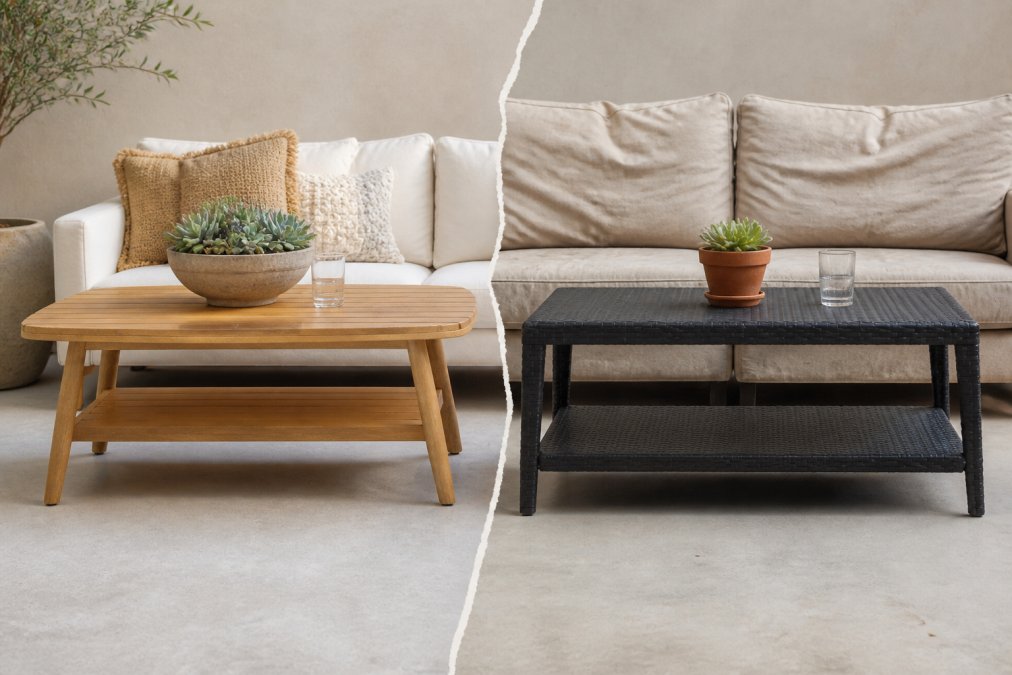
 comparison
High Quality Furniture vs Mass-Produced: What Actually Matters
Table of Contents
- High Quality Furniture vs Mass-Produced: The Core Differences
- How to Identify Solid Wood Furniture and Construction Quality
- Furniture Construction Techniques: Why Joinery and Craftsmanship Matter
- Investment Furniture vs Fast Furniture: Long-Term Value
- The Real Price Comparison: Upfront Cost vs. Lifetime Value
- Sustainability, Supply Chain, and What You're Really Buying
- Which Option Is Right for You?
- Conclusion
Last Updated: August 22, 2026
High Quality Furniture vs Mass-Produced: The Core Differences
When you're shopping for furniture, you're choosing between two fundamentally different manufacturing philosophies. High quality furniture and mass-produced pieces represent opposite ends of a spectrum in how items are made, what materials go into them, and how long they'll actually last in your home.
A handcrafted solid wood table and a flat-pack particleboard alternative might look similar from across the room, but they'll perform completely differently over the next decade. One is built to be repaired and refinished. The other is built to be replaced.
At Station Home Design, we've spent years curating pieces that represent genuine craftsmanship, items made to last. But we also understand the appeal of affordable furniture. The real question isn't which is objectively "better," but which makes sense for your specific situation, your space, and your timeline.
How to Identify Solid Wood Furniture and Construction Quality
Learning to spot the difference between genuine solid wood and engineered alternatives will transform how you shop.
What to Look for in Materials
Solid wood furniture is made from actual wood, typically hardwoods like oak, maple, walnut, or acacia. Mass-produced pieces often use particleboard or MDF (medium-density fiberboard), which are wood byproducts pressed together with adhesives. They're cheaper to manufacture but lack the structural integrity of solid wood.
Here's what to examine:
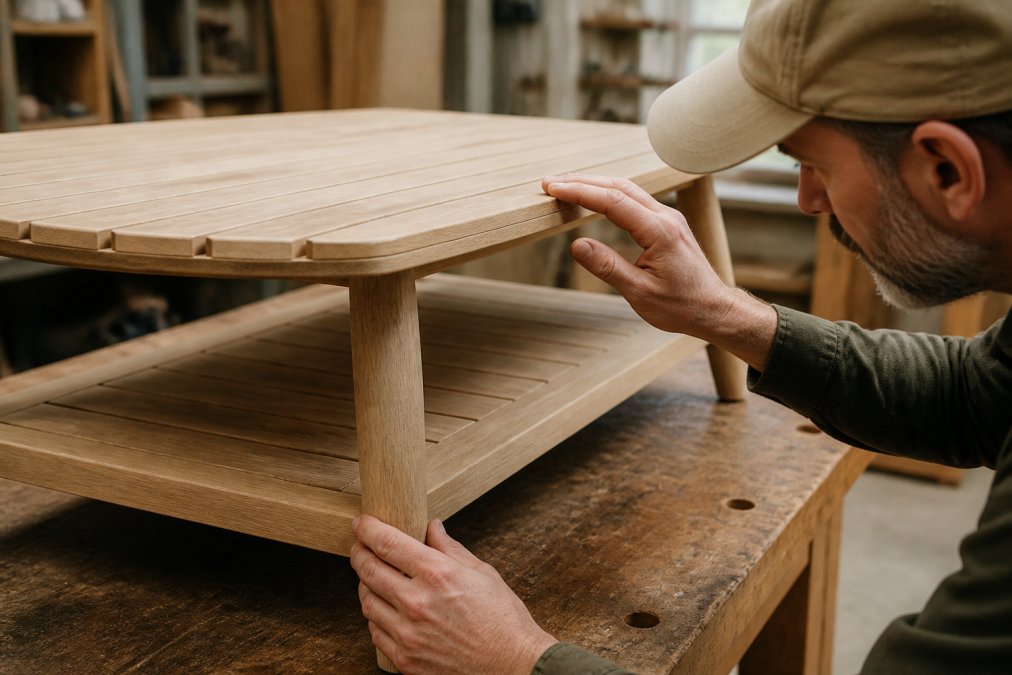
- The underside and edges. Solid wood shows grain patterns and natural color variation. Particleboard and MDF have a uniform, cardboard-like appearance. Veneer (thin real wood glued over a cheaper base) is a middle ground, beautiful but not solid wood.
- Weight and feel. Solid wood pieces are noticeably heavier. If a coffee table feels light enough to move with one hand, it's likely engineered materials. Station Home Design's Carlton Coffee Table in Dark Tobacco Brown weighs 27.6 pounds from solid pine construction.
- Joints and seams. Solid wood furniture uses joinery techniques. Mass-produced pieces rely on screws, staples, or dowels that often loosen over time.
- Finish quality. A quality finish feels smooth and consistent. Cheap finishes feel sticky, uneven, or plastic-like. Station Home Design pieces use protective NC lacquer that's hand-applied to highlight natural grain.
Red Flags in Mass-Produced Pieces
Watch for these warning signs:

- Particle board that's water-damaged or swollen. This material absorbs moisture easily and doesn't recover.
- Loose joints after minimal use. If a chair wobbles or a table feels unstable within months, the joinery wasn't designed for longevity.
- Finishes that chip or peel. Cheap finishes don't protect the underlying material, so damage spreads quickly.
- Drawers that stick or won't close smoothly. This indicates poor manufacturing tolerances.
- Chemical smell that lingers for months. Off-gassing from adhesives is common in mass-produced furniture, but it shouldn't persist.
Furniture Construction Techniques: Why Joinery and Craftsmanship Matter
How a piece is assembled determines whether it will last 5 years or 50.
Hand-Crafted Joinery vs. Hardware-Dependent Assembly
Solid wood furniture uses joinery, where wood pieces interlock and support each other through the grain structure itself. Common methods include:
- Mortise and tenon joints. A tenon (projecting piece) fits into a mortise (hollow cavity). When done well, this joint is stronger than the wood itself.
- Dovetail joints. Interlocking wedge-shaped cuts create a mechanical lock that resists pulling apart, commonly used in quality drawer construction.
- Box joints. Similar to dovetails, these interlocking rectangular cuts are strong and visually striking.
These techniques take time and skill. A craftsperson making a chair frame with mortise and tenon joints might spend hours on connections that mass-production facilities create in minutes using screws and dowels.
Mass-produced furniture relies on hardware: screws, staples, cam locks, and metal brackets. These fasteners hold pieces together through clamping force, not structural design. They work initially but loosen over time as wood naturally shifts and settles.
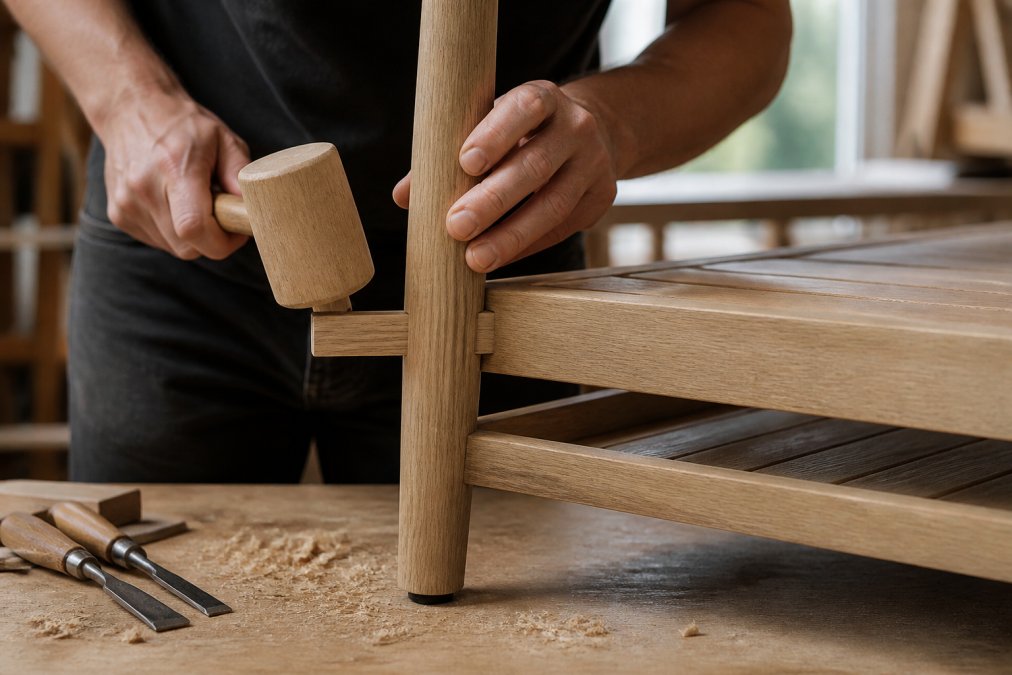
A chair with mortise and tenon joints will still be solid after 20 years. A chair held together with screws will likely wobble and creak within 5 years.
Finish Quality and Protective Treatments
The finish is protection, not just cosmetics. Quality finishes seal the wood, protect against moisture, and prevent damage from daily use.
Station Home Design pieces use hand-finished NC lacquer, applied in layers and sanded between coats. This creates a durable surface that improves with age and highlights natural grain. Mass-produced finishes are often thin and applied by machine, providing minimal protection and showing wear quickly.
A quality finish means the piece can be maintained, cleaned, and even refinished down the line. A cheap finish that's deteriorating leaves you with limited options.
Investment Furniture vs Fast Furniture: Long-Term Value
The furniture industry has adopted the "fast fashion" model, cheap pieces designed to last a few years before replacement. Investment furniture (also called "slow furniture") is made to last decades. It's more expensive upfront, but the cost per year of ownership is often lower than fast furniture.
Durability and Longevity Expectations
A solid wood table made with proper joinery and quality finish can last 30, 40, or even 50 years, developing a patina that adds character (peer-reviewed research). Mass-produced furniture typically lasts 3-7 years before becoming unstable, uncomfortable, or visibly worn (peer-reviewed research). Particleboard degrades faster than solid wood, especially with humidity or temperature changes.
Consider Station Home Design's Lowry Lift Top Coffee Table in Distressed Charcoal Brown. Made from solid acacia hardwood with metal legs and hand-finished protective lacquer, this piece is designed to be used and enjoyed for decades. The distressed finish hides minor wear, so aging looks intentional.

Resale Value and Repairability
Mass-produced furniture has essentially no resale value. A five-year-old flat-pack table is worthless. Quality furniture holds value, vintage solid wood pieces often appreciate or maintain their value. If you decide to upgrade or move, you can sell a well-made table or chair.
Repairability also matters. If a leg cracks on a solid wood table, a craftsperson can repair it. If a drawer front splits, it can be refinished. These repairs are worthwhile because the piece is worth fixing. Mass-produced furniture isn't repairable in any meaningful way.
The Real Price Comparison: Upfront Cost vs. Lifetime Value
Mass-produced furniture is cheaper to buy. Quality furniture is cheaper to own.
A basic particleboard coffee table might cost $150. A solid wood table from Station Home Design costs between $269.95 and $725.95 depending on the model and materials. That's a significant upfront difference.
Over 20 years, you might buy three particleboard tables at $150 each because they wear out, totaling $450 plus replacement effort and landfill contribution. You buy one quality table for $500 and it's still solid and beautiful after 20 years. You've spent $500 total, saved time, and kept furniture out of landfills.
The upfront cost difference feels real at checkout. The long-term value difference is even more real, but invisible until you actually live with the furniture for years. There's also the intangible factor: living with something you love versus something you tolerate.
This doesn't mean spending $700 on every piece. Station Home Design offers options at different price points. The Bayshore Outdoor Coffee Table in Light Teak starts at $269.95 and delivers genuine quality in solid acacia wood. The point is understanding what you're paying for and whether that investment makes sense for your situation.

Sustainability, Supply Chain, and What You're Really Buying
When you choose high quality furniture vs mass-produced pieces, you're also making a choice about environmental impact and manufacturing practices.
Mass-produced furniture optimizes for speed and volume, cutting corners on materials, labor, and environmental controls. Particleboard and MDF are made from wood waste held together with formaldehyde-based adhesives that off-gas volatile organic compounds into your home and the environment (the EPA). Supply chains are often opaque.
Quality furniture makers typically have transparent supply chains. Station Home Design sources solid hardwoods like acacia and mango from sustainable sources. Hand-finishing with NC lacquer means better control over chemicals used. The slower production process allows quality control at every step.
Repairability and longevity are also environmental factors. A piece lasting 40 years instead of 5 is dramatically more sustainable, regardless of initial materials.
Which Option Is Right for You?
The honest answer is: it depends on your situation.
Choose high quality furniture if:
- You're investing in your primary living space for the long term
- You value pieces that will last decades and potentially appreciate
- You care about environmental impact and transparency
- You want furniture that can be repaired and refinished rather than replaced
- You're willing to spend more upfront to spend less over time
- You appreciate craftsmanship and how quality materials feel and look
Mass-produced furniture might make sense if:
- You're furnishing a temporary space (rental, temporary housing, college dorm)
- You have a very tight budget and need to fill space quickly
- You're experimenting with a style or layout you might change soon
- You're okay with replacing items every few years
- You need something specific that's only available in mass-produced options
Many people invest in key pieces, a sofa, dining table, bed frame, and use more affordable options for accent pieces and items they might swap out frequently.
Station Home Design's curated collection is designed for people who want quality without guesswork. Each piece is selected for craftsmanship, durability, and timeless design. The Warm Shaker Coffee Table combines solid wood construction with transitional design that works in multiple styles. It's an investment piece that will serve you well for decades.
The key is being intentional about what you're buying and why. Understand the difference between high quality furniture vs mass-produced options, and make choices that align with your actual needs and values.
The furniture in your home shapes your daily experience more than you might realize. When you sit at a table that's solid and beautiful, when you open a drawer that glides smoothly, when you look at a piece that's aged gracefully over years, that matters. Station Home Design exists to help you build spaces filled with pieces like these. Our handcrafted solid wood tables and curated furnishings are designed to elevate your daily living, bring warmth to your home, and last for decades. Start building your collection with pieces that reflect your unique story and stand the test of time.
Frequently Asked Questions
How can you tell if furniture is high quality?
High quality furniture uses solid wood construction, features hand-crafted joinery (like mortise-and-tenon joints), has smooth finishes with protective lacquer, and shows attention to grain patterns. Mass-produced pieces rely on particleboard, veneer, staples, and hardware. Check underneath: solid wood furniture has visible grain consistency, while cheap pieces show pressed fibers or laminate. Feel the weight, quality pieces are substantially heavier due to solid materials rather than hollow cores.
What materials should I look for in high-quality furniture?
Solid hardwoods like acacia, mango, and pine are superior to particleboard and MDF. High-quality furniture uses wood throughout the frame, not just the visible surfaces. Look for hand-finished stains and protective NC lacquer coatings that resist wear. Avoid pieces with plastic dowels, thin veneer over particleboard, or metal fasteners visible from the outside. Quality upholstery uses natural fabrics and high-density foam rather than low-grade synthetics.
Does high-quality furniture hold its value better than mass-produced items?
Yes. Handcrafted pieces made from solid wood retain value far better than fast furniture. Quality construction means pieces can be repaired, refinished, and passed down, adding resale potential. Mass-produced furniture depreciates rapidly because it cannot withstand repairs and quickly shows wear. Solid wood investment pieces often appreciate in certain styles or become vintage collectibles, while flat-pack alternatives are landfill-bound within 5-10 years.
Is it better to buy one high-quality piece or several mass-produced items?
One quality piece beats several cheap ones. A handcrafted solid wood coffee table at $500+ will outlast five $100 mass-produced tables. Quality furniture adapts to design changes through refinishing or reupholstering, while cheap pieces become outdated and unusable. Start with key investment pieces, a durable sofa, dining table, or coffee table, then fill around them with smaller, trendier accents. This approach saves money long-term and creates a cohesive, lasting home.
What's the difference between handcrafted and mass-produced construction?
Handcrafted furniture uses traditional joinery techniques like mortise-and-tenon joints that create structural integrity without relying on hardware. Craftspeople hand-finish each piece, highlight grain patterns, and apply protective lacquer individually. Mass-produced furniture uses machine-cut parts, staples, nails, and dowels held together by glue and metal brackets. The result: handcrafted pieces are repairable and improve with age, while mass-produced items fail at stress points and cannot be restored.
This article was written using GrandRanker
Frequently Asked Questions
How can you tell if furniture is high quality?
High quality furniture uses solid wood construction, features hand-crafted joinery (like mortise-and-tenon joints), has smooth finishes with protective lacquer, and shows attention to grain patterns. Mass-produced pieces rely on particleboard, veneer, staples, and hardware. Check underneath: solid wood furniture has visible grain consistency, while cheap pieces show pressed fibers or laminate. Feel the weight—quality pieces are substantially heavier due to solid materials rather than hollow cores.
What materials should I look for in high-quality furniture?
Solid hardwoods like acacia, mango, and pine are superior to particleboard and MDF. High-quality furniture uses wood throughout the frame, not just the visible surfaces. Look for hand-finished stains and protective NC lacquer coatings that resist wear. Avoid pieces with plastic dowels, thin veneer over particleboard, or metal fasteners visible from the outside. Quality upholstery uses natural fabrics and high-density foam rather than low-grade synthetics.
Does high-quality furniture hold its value better than mass-produced items?
Yes. Handcrafted pieces made from solid wood retain value far better than fast furniture. Quality construction means pieces can be repaired, refinished, and passed down—adding resale potential. Mass-produced furniture depreciates rapidly because it cannot withstand repairs and quickly shows wear. Solid wood investment pieces often appreciate in certain styles or become vintage collectibles, while flat-pack alternatives are landfill-bound within 5-10 years.
Is it better to buy one high-quality piece or several mass-produced items?
One quality piece beats several cheap ones. A handcrafted solid wood coffee table at $500+ will outlast five $100 mass-produced tables. Quality furniture adapts to design changes through refinishing or reupholstering, while cheap pieces become outdated and unusable. Start with key investment pieces—a durable sofa, dining table, or coffee table—then fill around them with smaller, trendier accents. This approach saves money long-term and creates a cohesive, lasting home.
What's the difference between handcrafted and mass-produced construction?
Handcrafted furniture uses traditional joinery techniques like mortise-and-tenon joints that create structural integrity without relying on hardware. Craftspeople hand-finish each piece, highlight grain patterns, and apply protective lacquer individually. Mass-produced furniture uses machine-cut parts, staples, nails, and dowels held together by glue and metal brackets. The result: handcrafted pieces are repairable and improve with age, while mass-produced items fail at stress points and cannot be restored.