
 listicle
Best Curated Home Decor Alternatives
Table of Contents
- What Makes Curated Home Decor Alternatives Worth Exploring
- Artisan-Made and Handcrafted Home Accessories
- Sustainable Home Decor Brands That Deliver Style
- How to Style Curated Home Decor for Maximum Impact
- Unique Home Accessories Websites: Where to Shop
- Logistics, Returns, and Shipping Transparency
- Investment vs. Affordable Curated Pieces
- Conclusion
Last Updated: August 28, 2026
What Makes Curated Home Decor Alternatives Worth Exploring
Finding the right pieces to fill your home shouldn't feel like searching for a needle in a haystack. Yet that's exactly what happens when you wander into a big-box store expecting something that actually reflects who you are. The aisles overflow with mass-produced items designed to appeal to everyone, which means they appeal to no one in particular.
This is where curated home decor alternatives come in. Rather than drowning in endless options, you get thoughtfully selected designs that work together, pieces chosen for quality, aesthetic cohesion, and genuine craftsmanship. Station Home Design specializes in exactly this approach, offering collections that help you build spaces telling your unique story without decision paralysis.

The shift toward curated alternatives reflects a growing desire for homes that feel intentional rather than accidental. People increasingly want pieces that last, that mean something, and that don't require constant replacement. Curated selections eliminate the noise. Instead of sorting through thousands of mediocre options, you're working with a filtered collection where every piece has been evaluated for quality, design coherence, and lasting appeal.
Artisan-Made and Handcrafted Home Accessories
Handcrafted pieces carry something mass production simply cannot replicate: the mark of human intention. When you bring an artisan-made accessory into your home, you're inviting in the skill, creativity, and care of the person who made it.
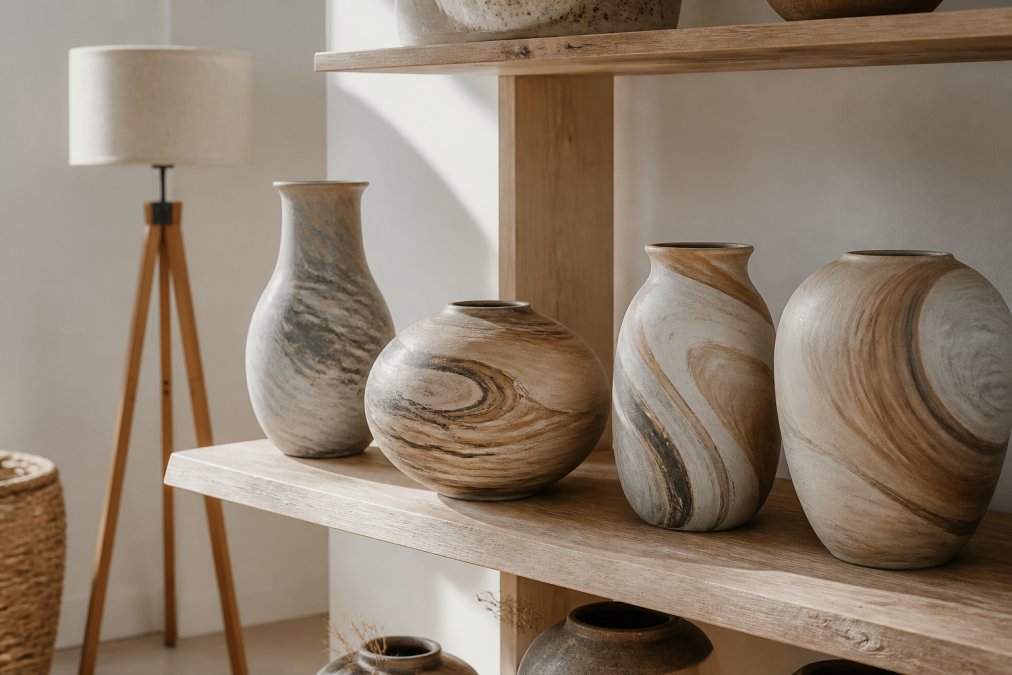
The beauty of handcrafted accessories lies in their uniqueness. No two pieces are identical. A ceramic vase like the Cammen Vase features naturally flowing swirls and neutral hues that give it an organic, one-of-a-kind character. These pieces work as statement accents on entryway tables, desks, or bookshelves, signaling that your space is thoughtfully designed rather than hastily assembled.
Artisan-made pieces also age beautifully. Rather than looking dated after a few years, handcrafted items develop character. A ceramic vase gains patina; a wooden accent piece deepens in tone. This is the opposite of fast furniture, which tends to look cheaper the longer you own it. Look for creators who document their process, specify materials clearly, and explain their sourcing, this transparency signals confidence in their craft.
Sustainable Home Decor Brands That Deliver Style
Sustainability isn't just an ethical choice anymore; it's become a design choice. Brands focused on sustainable sourcing and ethical production often create pieces with more thoughtful design than their mass-market counterparts.
The Senneterre Natural Jute Rug exemplifies this approach. Handmade from natural jute with thick end tassels, it's both durable and eco-friendly. The neutral tone and texture complement virtually any decor style, making it a versatile choice that won't need replacing when trends shift. Sustainable pieces like this work harder in your space because they're designed to last.
When evaluating sustainable home decor brands, look beyond marketing language. Real sustainability shows up in specific practices: fair trade sourcing, transparent supply chains, use of natural or recycled materials, and production methods that minimize waste. Many of the most beautifully designed pieces today come from makers prioritizing both aesthetics and ethics.
How to Style Curated Home Decor for Maximum Impact
Here's what most people get wrong about styling: they treat each piece as an isolated decision. The secret to making curated pieces work is understanding how they relate to each other.
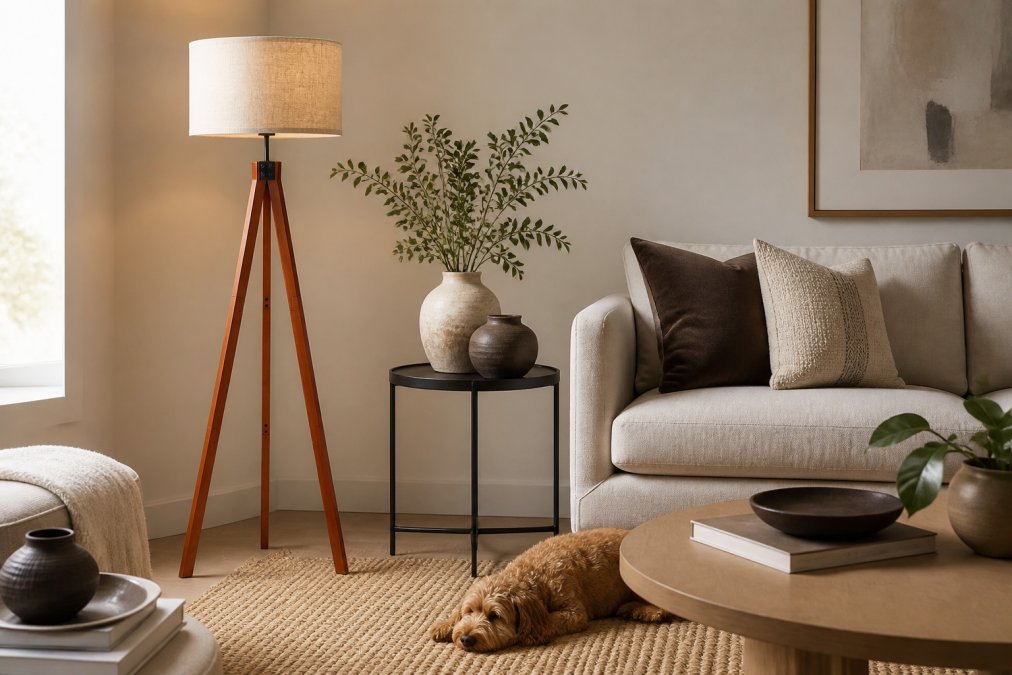
Start by identifying your anchor piece, the item that will set the tone for the entire space. This might be a statement floor lamp like the Nola Floor Lamp, with its twisted brass stalk and three warm globes, or a textured rug that grounds the room visually. Everything else builds from there.

Color and texture are your tools for cohesion. If your anchor piece is warm brass tones, select complementary accessories in similar warm metals and natural materials. If your rug features subtle gray and cream tones, choose wall art and accessories that echo those colors. Scale and proportion matter too, group items in odd numbers (three or five pieces together) rather than pairs for a curated, intentional look.
Consider negative space, the empty areas around your pieces. Overcrowding a shelf defeats the purpose of curating. Leave breathing room so each piece can be appreciated individually while still contributing to the overall composition.
Unique Home Accessories Websites: Where to Shop
Finding sources for genuinely unique pieces requires knowing where to look. Station Home Design operates as a curated marketplace, selecting pieces that meet specific standards for quality, design, and longevity.
The best unique home accessories websites provide detailed product descriptions explaining materials, dimensions, and sourcing. They show multiple angles and real-life contexts, not just studio shots. They're transparent about production methods, whether pieces are handmade, sustainably sourced, or limited editions.
Macrame accessories have experienced a resurgence for good reason. The Handmade Macrame Plant Hangers from Station Home Design are created individually using 100% cotton cord, with each piece made to order. If you're handy, the Macrame Wall Hanging Pattern offers step-by-step instructions for creating your own statement piece.

Wall art deserves its own category in curated selections. The Seretha Gold Leaf Wall Décor brings modern elegance to any room with its iron construction and gold leaf finish. When shopping for unique home accessories, prioritize websites that curate rather than simply catalog.
Logistics, Returns, and Shipping Transparency
Here's the uncomfortable truth about buying home decor online: you can't touch it first, and shipping timelines vary wildly depending on whether you're buying in-stock or made-to-order. Understanding logistics before you buy prevents frustration.
Understanding Production and Shipping Timelines
Curated retailers typically offer three categories of items with different timelines. In-stock pieces ship within 2-3 business days (the FTC). Made-to-order handcrafted items require 3-5 business days of production time before shipping begins (the FTC). Limited-edition or custom pieces may take 1-2 weeks or longer. The best retailers display this information prominently on product pages. Before adding anything to your cart, check whether you're buying something ready to ship or something that needs to be made first.
Shipping costs for curated home decor can surprise you. A rug weighs more than a candle, and that weight translates to higher carrier fees. Transparent retailers show shipping costs before checkout, not after. Some offer free shipping thresholds, which changes the math on whether you're buying one statement piece or bundling several smaller items.
Return Policies: The Real Test of Confidence
Return policies reveal whether a business stands behind its products. Look for these specific markers:
Original condition requirements are where return policies get tricky. Most retailers require items to be unused and in original packaging. Some allow a "test period" where you can use the item to see how it works in your home, then return it if it doesn't fit.
Shipping damage: Who pays? If a piece arrives damaged, the retailer should cover return shipping and replacement or refund without question. Ask before buying: "What's your process if this arrives damaged?" Their response tells you everything.
Evaluating Photos Before You Buy
Request "lifestyle" and "detail" shots. Lifestyle photos show the piece in a real room setting, revealing scale and how it interacts with other decor. Detail shots show texture, finish, and construction quality up close. For items like rugs or textiles, ask about color accuracy. Asking "How does this photograph compared to real life?" often gets honest answers from retailers who've fielded the question before.
International and Small-Batch Shipping Realities
Many curated pieces come from independent makers or small producers. If an item is handmade or imported, shipping may take longer and cost more. Some retailers batch orders weekly or bi-weekly rather than shipping daily. Check the "Ships by" date on product pages. For items shipping from international makers, customs and import duties may apply depending on the item's origin and value.
The Questions to Ask Before Clicking Buy
Before purchasing from any curated retailer, answer these three questions:
- When will this ship? (In-stock, made-to-order, or batched?)
- What's the return window and what condition must it be in?
- Who pays if it arrives damaged?
If a retailer makes these answers hard to find, that's intentional. Move on. The best curated retailers make logistics transparent because they know it builds trust.
Investment vs. Affordable Curated Pieces
The curated home decor market spans a wide price range, and understanding where to spend and where to save is the difference between a cohesive home and a collection of random purchases.
The Budget Allocation Framework
Think of your home in three tiers: anchor pieces, supporting pieces, and accents. Anchor pieces are items you'll see and use constantly, your primary floor lamp, the rug under your sofa, the wall art above your bed. These deserve higher investment because they set the tone for entire rooms and you'll live with them for years. Supporting pieces are secondary items that complement anchors. Accents are the smallest, most changeable items. A practical budget split might look like this: 50% on anchor pieces, 30% on supporting pieces, and 20% on accents.
When to Spend More
Invest in pieces you'll use daily and see constantly. A floor lamp like the Nola Floor Lamp anchors a reading corner and you'll interact with it every single day. Similarly, a rug that grounds your living room seating area deserves investment because it's the visual foundation of the space. These pieces should be built to last 10+ years, which means solid construction, quality materials, and timeless design.
Statement wall art also warrants investment if it's the focal point of a room. Lighting deserves special attention in the investment category. Poor lighting makes even beautiful spaces feel off. Quality lighting fixtures improve both the functionality and aesthetics of a room.
When to Spend Less
Affordable curated pieces prove you don't need to spend heavily to access quality. Handcrafted accessories in the mid-range add personality without breaking your budget. These items age well and develop character over time. Accents and decorative objects are where you can experiment and change things seasonally. Textiles like throw pillows or smaller rugs can be affordable because they're easier to swap out if your taste changes.
The Quality-to-Price Ratio
Quality at any price point is recognizable if you know what to look for. When evaluating whether a price is justified, ask these questions:
- What's the material? Natural fibers (jute, cotton, wool, wood, ceramic) typically outlast synthetics (peer-reviewed research). Solid brass or iron lasts longer than plated metals.
- Is construction visible? Can you see how the piece is made? Visible stitching, joinery, or weaving suggests quality.
- Does the maker explain their process? Artisans and quality producers document how they work. This transparency correlates with confidence in the product.
- What's the warranty or guarantee? Some makers offer guarantees on their work, signaling they stand behind what they've made.
The Replacement Cost Reality Check
Here's a useful mental framework: divide the price by how many years you'll keep the item. A floor lamp you use for 10 years costs far less per year than a rug that falls apart in 2 years. The cheapest option isn't always the best value.
Building a Balanced Collection
Start with one anchor piece in each room, a floor lamp, a rug, or a statement wall art. Invest here. Then add supporting pieces that complement the anchor. Finally, fill in with affordable accents that add personality. If you're furnishing a space on a tight budget, buy one quality anchor piece and fill the rest with affordable accents temporarily. As your budget allows, upgrade supporting pieces.
The goal isn't to spend the most or the least, it's to spend intentionally. Curated home decor alternatives make this easier because the curation has already filtered out low-quality options at every price point. Whether you're buying a pattern or a lamp, you're getting something worth the price.
Frequently Asked Questions
Q: What defines a curated home decor style, and how is it different from mass-produced decor?
A: Curated home decor emphasizes thoughtfully selected, often artisan-made pieces that prioritize quality, uniqueness, and intentional design. Unlike mass-produced decor, curated alternatives celebrate small-batch production, sustainable sourcing, and one-of-a-kind aesthetic choices. Each piece tells a story and reflects the maker's craftsmanship rather than factory efficiency. This approach creates spaces with personality and depth that mass-market alternatives struggle to achieve.
Q: Where can I find unique home accessories websites that aren't mass-produced?
A: Unique home accessories websites focus on independent makers, artisan collectives, and small-batch producers. Look for platforms that highlight handcrafted items, fair-trade sourcing, and transparent production practices. Many feature maker stories and production details so you understand exactly where your pieces come from. Station Home Design curates collections from independent artisans and sustainable producers, offering statement pieces like the Cammen Vase ($48.98) and handmade macrame plant hangers ($34.00) that showcase authentic craftsmanship.
Q: How do I know if curated home decor will actually match my space and style?
A: Start by identifying your aesthetic preferences: modern, bohemian, minimalist, eclectic, or transitional. Reputable curated retailers provide detailed product descriptions, material information, and styling inspiration to help you visualize pieces in context. Before purchasing, check return policies carefully, quality curated shops often have transparent return windows. Reading customer reviews and looking at styled photos helps confirm whether a piece truly fits your vision before it arrives.
Q: Are sustainable home decor brands more expensive than conventional alternatives?
A: Sustainable home decor brands span a wide price range, from affordable entry-level pieces to investment-grade items. While some eco-conscious pieces cost more due to ethical sourcing and quality craftsmanship, many offer competitive pricing. For example, the Senneterre Natural Jute Rug ($59.00) provides handmade, eco-friendly quality at an accessible price point. The key is understanding what you're paying for: durability, ethical production, and longevity often justify slightly higher upfront costs compared to disposable mass-market decor.
This article was written using GrandRanker
Frequently Asked Questions
Q: What defines a curated home decor style, and how is it different from mass-produced decor?
A: Curated home decor emphasizes thoughtfully selected, often artisan-made pieces that prioritize quality, uniqueness, and intentional design. Unlike mass-produced decor, curated alternatives celebrate small-batch production, sustainable sourcing, and one-of-a-kind aesthetic choices. Each piece tells a story and reflects the maker's craftsmanship rather than factory efficiency. This approach creates spaces with personality and depth that mass-market alternatives struggle to achieve.
Q: Where can I find unique home accessories websites that aren't mass-produced?
A: Unique home accessories websites focus on independent makers, artisan collectives, and small-batch producers. Look for platforms that highlight handcrafted items, fair-trade sourcing, and transparent production practices. Many feature maker stories and production details so you understand exactly where your pieces come from. Station Home Design curates collections from independent artisans and sustainable producers, offering statement pieces like the Cammen Vase ($48.98) and handmade macrame plant hangers ($34.00) that showcase authentic craftsmanship.
Q: How do I know if curated home decor will actually match my space and style?
A: Start by identifying your aesthetic preferences: modern, bohemian, minimalist, eclectic, or transitional. Reputable curated retailers provide detailed product descriptions, material information, and styling inspiration to help you visualize pieces in context. Before purchasing, check return policies carefully—quality curated shops often have transparent return windows. Reading customer reviews and looking at styled photos helps confirm whether a piece truly fits your vision before it arrives.
Q: Are sustainable home decor brands more expensive than conventional alternatives?
A: Sustainable home decor brands span a wide price range, from affordable entry-level pieces to investment-grade items. While some eco-conscious pieces cost more due to ethical sourcing and quality craftsmanship, many offer competitive pricing. For example, the Senneterre Natural Jute Rug ($59.00) provides handmade, eco-friendly quality at an accessible price point. The key is understanding what you're paying for: durability, ethical production, and longevity often justify slightly higher upfront costs compared to disposable mass-market decor.