
 listicle
Afternoon Light Alternatives for Decor: 7 Ways
Table of Contents
- Why Afternoon Light Alternatives Matter for Your Home
- Warm Ambient Lighting Ideas to Replace Natural Afternoon Light
- How to Brighten a Dark Room with Decor Beyond Natural Light
- Warm vs Cool Light Bulbs for Decor: Making the Right Choice
- Floor Lamps: Your Afternoon Light Alternative Workhorse
- Table Lamps and Accent Lighting for Targeted Warmth
- Smart Lighting and Circadian Rhythm Alignment
- DIY Light Diffusion and Decorative Techniques
Last Updated: August 30, 2026
Why Afternoon Light Alternatives Matter for Your Home
When the sun dips below the horizon around 5 p.m., most homes face a sudden problem: natural light vanishes and your beautifully designed space goes from golden and cozy to dim and uninviting in minutes. Without thoughtful lighting solutions, even stunning interiors feel cold and lifeless once daylight fades.
The challenge isn't just visibility, it's atmosphere. Natural afternoon light has a quality that's nearly impossible to replicate, which is why strategic lighting design combined with reflective surfaces and layered light sources is essential. You don't need to wait for the sun to come back, the right combination of ambient lighting, task lighting, and accent pieces can transform your space into something that feels just as inviting as a golden afternoon hour.
At Station Home Design, we help you create spaces that tell your unique story. By blending comfort, elegance, and everyday functionality, our pieces are crafted to elevate your daily living experience. Below, we'll explore seven proven approaches to replace that lost afternoon light and show you exactly how to implement each one.

Warm Ambient Lighting Ideas to Replace Natural Afternoon Light
Ambient lighting forms the foundation of any well-lit room. Unlike task lighting (which focuses on a specific area) or accent lighting (which highlights decor), ambient lighting fills the entire space with a soft, enveloping glow.
The key is understanding color temperature, measured in Kelvin ratings. Warm white light (2700K-3000K) matches the golden quality of afternoon sunlight (ies.org). Cool white light (4000K and above) mimics midday or overcast skies and will make your space feel clinical once the sun sets. For afternoon light alternatives, always choose warm white.
Layering Light Sources for Depth and Warmth
Most people rely on a single ceiling fixture, resulting in flat, unflattering light that makes rooms feel sterile. Professional designers layer light sources at different heights and positions to create visual depth and warmth.
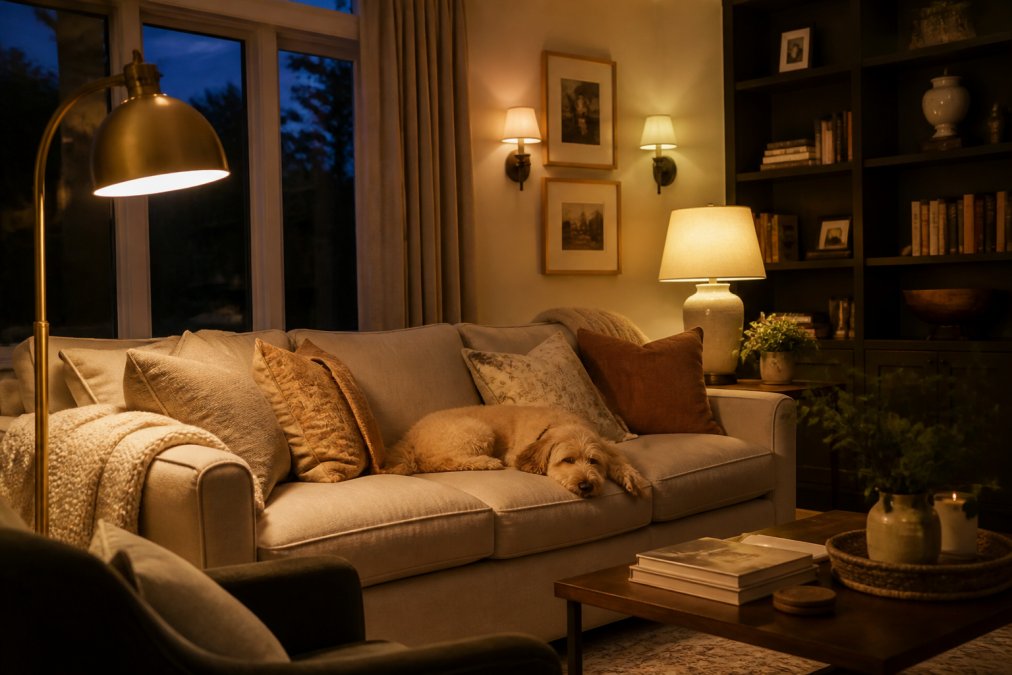
Position a floor lamp in one corner, a table lamp on a side table, and wall sconces at eye level. When all three are on simultaneously, they cast light from multiple angles, creating shadows and highlights that feel natural and inviting. The American Lighting Association recommends layering as the foundation of effective interior lighting design. Start with ambient light as your base, then add task and accent layers on top.

The Role of Color Temperature in Creating Coziness
Color temperature is non-negotiable when replacing afternoon light. A 2700K bulb creates that golden, warm glow you associate with sunset. A 3000K bulb is slightly cooler but still feels comfortable. Anything above 4000K will feel harsh and artificial in the evening.
Most people buy whatever bulb is cheapest without checking the Kelvin rating, resulting in unwelcoming rooms despite adequate light. When shopping for afternoon light alternatives, always verify the color temperature before purchasing. LED technology has made warm white lighting affordable and efficient, allowing you to layer multiple sources without worrying about your electric bill.
How to Brighten a Dark Room with Decor Beyond Natural Light
Sometimes the problem isn't just lighting, it's that your room absorbs light rather than reflecting it. Dark walls, furniture, and flooring consume light instead of bouncing it around. Strategic use of reflective surfaces and light-colored decor solves this problem.
Reflective Surfaces and Strategic Placement
Mirrors are the secret weapon for brightening dark rooms. A well-placed mirror reflects light around the room, making the space feel brighter and larger. Position a mirror opposite a light source so it bounces that light back into the room, effectively doubling illumination without adding another fixture.
Metallic finishes on lamps, picture frames, and decorative objects also reflect light effectively. Brass, gold, and chrome fixtures are more than stylish, they're functional tools for spreading light. Glass and crystal work well too. A glass-based table lamp like the Ellis Glass Table Lamp with its vibrant blue glass base catches and reflects warm light beautifully, adding both visual interest and functional brightness.
Light-Colored Decor and Accent Pieces
Light-colored walls, furniture, and textiles reflect more light than dark alternatives. Neutral tones like cream, soft gray, and pale beige all work well. When replacing afternoon light with artificial sources, light-colored decor acts as a multiplier, each light source bounces off these surfaces multiple times, creating a brighter overall effect.
Accent pieces in warm metallics, gold picture frames, brass candleholders, and copper-finished mirrors all contribute to this reflective effect, catching light and distributing it around the room.
Warm vs Cool Light Bulbs for Decor: Making the Right Choice
Warm light bulbs (2700K-3000K) should be your default for any afternoon light alternative. Cool light bulbs (4000K and above) belong in task-specific areas like kitchens or bathrooms where you need clarity, not coziness.
Our brains associate warm light with comfort and safety, an evolutionary response to fire and sunset. Cool light signals alertness and activity (peer-reviewed research). When the sun sets and you want your space to feel inviting, warm light is the only choice that makes sense.
For dimmable fixtures, warm white bulbs are essential. When you dim a cool white bulb, it can take on an odd, grayish tone. Warm white bulbs maintain their color quality across all brightness levels, giving you flexibility without sacrificing atmosphere.
Floor Lamps: Your Afternoon Light Alternative Workhorse
Floor lamps are the most versatile tool for replacing afternoon light. They're portable, adjustable, and come in styles that work with any decor. Unlike ceiling fixtures, floor lamps can be positioned exactly where you need light.
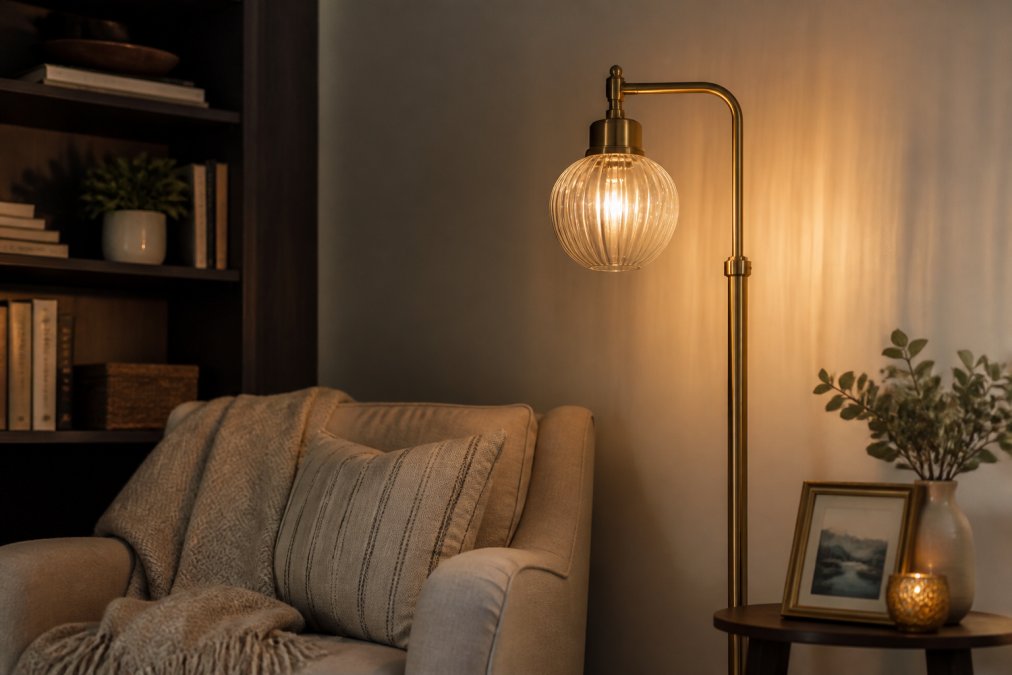
The best floor lamps for afternoon light alternatives have three key features: dimmable bulbs, adjustable positioning, and warm color temperature. The Nola Floor Lamp from Station Home Design exemplifies this perfectly. Its three dimmable warm globes cast light in all directions, creating layered ambient lighting. The twisted brass stem adds visual interest while the foot pedal switch makes operation intuitive.
Multi-Directional and Dimmable Options
Multi-directional floor lamps give you maximum flexibility. The Jacob Lamp offers 360-degree adjustability with three moveable heads that swivel independently, letting you direct light exactly where needed. For something more understated, the Eden Floor Lamp provides ambient lighting through a tripod design with a neutral linen shade and dimmable bulbs.
The Leaf Floor Lamp takes a nature-inspired minimalist approach, available in antique brass, black, and silver with a three-touch dimmer for precise control. It's ideal if you want an afternoon light alternative that doubles as a statement piece.
Table Lamps and Accent Lighting for Targeted Warmth
While floor lamps handle ambient lighting, table lamps provide targeted warmth to specific areas. A table lamp on a nightstand, side table, or desk creates a pool of warm light that feels intimate and inviting. Position table lamps at eye level when seated for better visual balance.
The Dawn Table Lamp from Station Home Design features a green glass base with brass accents and white fabric shade, creating ambient accent lighting that works as both functional fixture and decorative statement. For something more portable, the Celia Portable Lamp offers cordless convenience with up to 30 hours of battery life and touch dimming, ideal for renters or anyone wanting flexibility. The mushroom silhouette adds retro-modern charm.
For a more upscale option, the D15x23" Glass Table Lamp with its bottle-shaped base and foil mercury finish creates elegant accent lighting. The transitional style works with various decor approaches, making it a versatile afternoon light alternative.
Smart Lighting and Circadian Rhythm Alignment
Modern smart lighting goes beyond simple on-off control. Smart bulbs can adjust color temperature throughout the day, mimicking natural light patterns and aligning with your body's circadian rhythm.
Your body responds to light cues: bright, cool light in the morning signals alertness, while warm, dim light in the evening signals rest. Most homes work against this natural rhythm. Smart bulbs solve this problem by gradually warming up as the sun sets, creating a smooth transition from afternoon light to evening warmth.
The Smart Bulb Vintage Style from Station Home Design offers color-changing capability with a dimmable Edison-style filament design. The advantage is subtle but powerful: your body receives the light signals it expects, making the transition from day to evening feel natural rather than jarring.
DIY Light Diffusion and Decorative Techniques
You don't need expensive fixtures to improve how light behaves in your space. Simple DIY techniques can diffuse harsh light and create softer, more inviting afternoon light alternatives.
The most basic approach is using fabric or paper to diffuse light. A white fabric shade softens direct light, spreading it more evenly throughout a room. If you have a bare bulb that's too bright, wrapping it with white tissue paper or placing a frosted shade in front of it instantly softens the effect.
Frosted glass or acrylic panels placed in front of light sources also work well, diffusing harsh light while maintaining brightness. Layering sheer curtains or fabric panels in front of windows where you position lamps creates additional diffusion, mimicking how fabric diffuses natural sunlight.
Reflective surfaces like mirrors and metallic finishes also play a role in diffusion. Rather than light bouncing straight back, reflective surfaces at angles scatter light throughout the room, which is why brass and gold finishes are functionally superior to matte finishes for spreading light.
The shift from afternoon light to evening darkness doesn't have to mean sacrificing warmth and atmosphere. By layering light sources, choosing warm color temperatures, using reflective surfaces, and strategically positioning fixtures, you can create an environment that feels just as inviting at 8 p.m. as it does at 4 p.m.
Station Home Design's curated collection of floor lamps, table lamps, and smart bulbs makes implementing these afternoon light alternatives straightforward. Whether you're starting with the versatile Nola Floor Lamp or building a complete layered lighting system, each piece is designed to work together, creating spaces that feel warm, welcoming, and effortlessly stylish. Explore our lighting collection and discover how the right fixtures transform your home from sunset onward.

Frequently Asked Questions
What color temperature should I choose for afternoon light alternatives?
For warm, inviting afternoon light alternatives, choose bulbs between 2700K and 3000K (warm white). This kelvin rating mimics the golden hour and creates a cozy aesthetic. Avoid cool white (4000K+), which feels sterile and clinical. Dimmable warm bulbs give you flexibility to adjust brightness throughout the day, matching how natural afternoon light would gradually fade.
How can I create warm ambient lighting ideas without relying on natural light?
Layer multiple light sources at different heights: floor lamps for general illumination, table lamps for accent lighting, and wall-mounted fixtures for depth. Use warm-toned bulbs (2700K) and incorporate reflective surfaces like mirrors and glass to distribute light evenly. The Nola Floor Lamp ($129) with its three dimmable globes is perfect for layering, casting soft light in multiple directions to create that warm glow throughout your space.
Can smart bulbs help me achieve afternoon light alternatives throughout the day?
Yes. Smart bulbs like the Smart Bulb Vintage Style ($37) let you automate color temperature changes based on time of day, supporting your circadian rhythm. Morning light can be slightly cooler (3000K) to boost alertness, while evening shifts to warmer tones (2200K) to promote relaxation. This automation mimics natural light patterns and eliminates the need to manually adjust bulbs as afternoon transitions to evening.
How do I brighten a dark room with decor if I don't have afternoon sunlight?
Position floor and table lamps strategically to eliminate shadows. Use reflective decor like mirrors, glass tabletops, and metallic accents to bounce light around the room. Light-colored walls, curtains, and upholstery amplify whatever light you create. The Eden Floor Lamp ($109) with its neutral shade diffuses light softly, while the Ellis Glass Table Lamp ($195.95) with its vibrant blue base reflects and distributes light beautifully across the space.
This article was written using GrandRanker
Frequently Asked Questions
What color temperature should I choose for afternoon light alternatives?
For warm, inviting afternoon light alternatives, choose bulbs between 2700K and 3000K (warm white). This kelvin rating mimics the golden hour and creates a cozy aesthetic. Avoid cool white (4000K+), which feels sterile and clinical. Dimmable warm bulbs give you flexibility to adjust brightness throughout the day, matching how natural afternoon light would gradually fade.
How can I create warm ambient lighting ideas without relying on natural light?
Layer multiple light sources at different heights: floor lamps for general illumination, table lamps for accent lighting, and wall-mounted fixtures for depth. Use warm-toned bulbs (2700K) and incorporate reflective surfaces like mirrors and glass to distribute light evenly. The Nola Floor Lamp ($129) with its three dimmable globes is perfect for layering, casting soft light in multiple directions to create that warm glow throughout your space.
Can smart bulbs help me achieve afternoon light alternatives throughout the day?
Yes. Smart bulbs like the Smart Bulb Vintage Style ($37) let you automate color temperature changes based on time of day, supporting your circadian rhythm. Morning light can be slightly cooler (3000K) to boost alertness, while evening shifts to warmer tones (2200K) to promote relaxation. This automation mimics natural light patterns and eliminates the need to manually adjust bulbs as afternoon transitions to evening.
How do I brighten a dark room with decor if I don't have afternoon sunlight?
Position floor and table lamps strategically to eliminate shadows. Use reflective decor like mirrors, glass tabletops, and metallic accents to bounce light around the room. Light-colored walls, curtains, and upholstery amplify whatever light you create. The Eden Floor Lamp ($109) with its neutral shade diffuses light softly, while the Ellis Glass Table Lamp ($195.95) with its vibrant blue base reflects and distributes light beautifully across the space.