 listicle
Affordable Home Decor That Looks Expensive: 10 Designer Hacks
Table of Contents
- 1. Master Rug Placement and Scale
- 2. Upgrade Cabinet and Door Hardware
- 3. Affordable Home Decor on a Budget: The Power of Architectural Details
- 4. Layer Textures and Textiles for Visual Depth
- 5. How to Style a Room Like a Designer: Lighting and Focal Points
- 6. Best Materials for Expensive Looking Decor Without the Price Tag
- 7. Declutter, Curate, and Style Like a Pro
- Conclusion
Last Updated: August 29, 2026
You know that feeling when you walk into someone's home and think, "How did they make this look so expensive?" The secret rarely involves a trust fund or a designer on speed dial. It's actually a series of deliberate, budget-friendly choices that create the illusion of luxury. At Station Home Design, we offer a thoughtfully curated collection of home decor and furnishings designed to help you create spaces that tell your unique story, blending comfort, elegance, and everyday functionality. It's about being intentional with what you choose and how you arrange it.

This guide reveals the exact strategies to create affordable home decor that looks expensive without emptying your wallet. Whether you're renting or investing in a forever home, these ten designer hacks will transform your rooms into spaces that feel polished, intentional, and genuinely luxurious.
Quick Picks
- Best Overall Strategy: Master rug placement and scale, a properly sized rug anchors a room and instantly elevates its perceived value
- Quickest Win: Upgrade cabinet and door hardware, small changes create disproportionate visual impact
- Most Transformative: Layer textures and textiles, this single technique separates amateur decorating from designer work
1. Master Rug Placement and Scale
The most common mistake people make with rugs is buying one that's too small. A rug that doesn't anchor your furniture creates visual chaos and makes your space look cheaper, not more expensive.
Your rug should be large enough that at least the front legs of your major furniture pieces sit on it (asid.org). In a living room, this typically means 8x10 feet or larger. In a bedroom, it should extend at least 2-3 feet beyond the bed on all sides. This creates visual weight and defines the space as intentional rather than accidental.
The American Society of Interior Designers emphasizes that proper scale and proportion are foundational to professional-looking interiors. When your rug is undersized, the eye registers "mismatched pieces scattered around", the opposite of curated.
2. Upgrade Cabinet and Door Hardware
Hardware is the jewelry of your home. It's the detail that catches light, signals quality, and costs almost nothing to change. Swapping out builder-grade hardware for something with visual weight transforms cabinets, drawers, and doors from "builder standard" to "designer selected."
When someone runs their hand along a cabinet pull and feels substantial weight and smooth finish, their brain registers "expensive." Look for hardware with solid metal construction, an antiqued or brushed finish, and visual weight that suggests substance. Brass, brushed gold, and matte black are currently the most sophisticated choices.
3. Affordable Home Decor on a Budget: The Power of Architectural Details
Architectural details create the bespoke feel that makes a space feel designed rather than decorated. Crown molding, wall paneling, and decorative trim suggest permanence and intentionality.
If you're renting or unwilling to commit to permanent changes, focus on architectural styling instead. A tall mirror with architectural detailing creates the visual impression of built-in elements while remaining portable. Peel-and-stick wall paneling, ornate mirrors, and decorative wall sculptures echo architectural language without commitment.
Architectural details work because they create visual complexity without clutter. A renter-friendly space with thoughtful architectural styling looks more expensive than an owned home with bare walls.
4. Layer Textures and Textiles for Visual Depth
This is where amateur decorating becomes designer-level work. Layering textures creates visual and tactile depth that reads as intentional and expensive. A room with only smooth surfaces feels flat; a room with multiple textures feels curated.
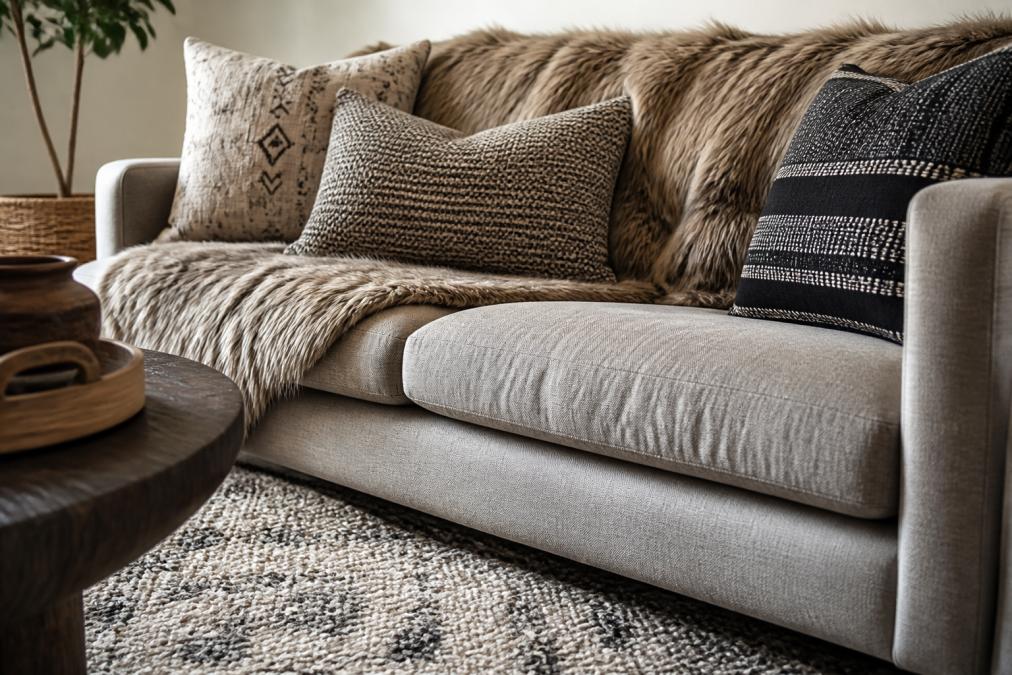
Start with foundational textures: soft textiles (throws, blankets, cushions in faux fur, linen, or chunky knit), hard textures (metal accents, wood elements, glass surfaces), woven textures (baskets, area rugs, wall hangings), and smooth surfaces (ceramic, glass, polished metal) to prevent the space from feeling too busy.
The LUX Heavy Faux Fur Throw Blanket from Station Home Design is a masterclass in texture layering. At 50x60 inches, it's substantial enough to create visual weight on a sofa or bed. The hand-finished polyester and acrylic blend creates that expensive, touchable quality that signals luxury without the actual luxury price tag.

5. How to Style a Room Like a Designer: Lighting and Focal Points
Professional designers obsess over lighting because it's the single most transformative element in any room (asid.org). Layered lighting, combining ambient, task, and accent lighting, creates depth, atmosphere, and that coveted "ambient glow" that reads as intentional luxury.
The mistake most people make is relying on overhead ceiling lights alone. Ceiling lights flatten a room and eliminate shadow play, which is where visual interest lives. A designer-styled room has multiple light sources at different heights, creating focal points and drawing the eye around the room deliberately.
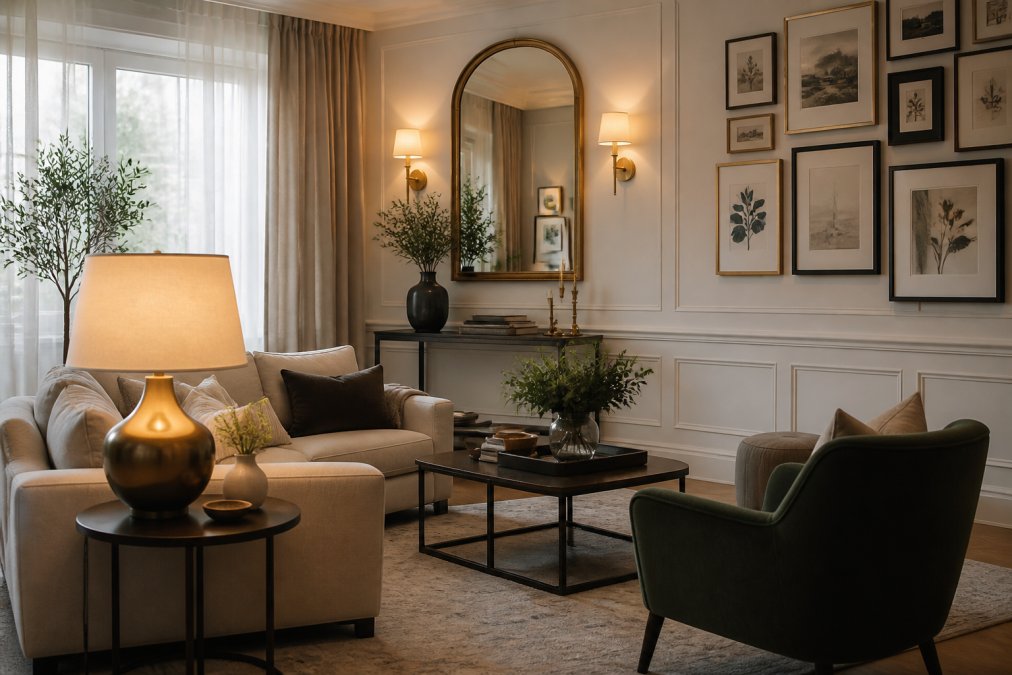
| Lighting Type | Purpose | Best Placement | Effect |
|---|---|---|---|
| Ambient | Overall room illumination | Ceiling or high walls | Creates base light level |
| Task | Functional lighting for activities | Beside seating, near work areas | Enables specific activities |
| Accent | Highlights focal points | Around mirrors, artwork, architectural details | Creates visual interest and depth |
Focal points are where the eye naturally lands first. In a designer-styled room, there's always at least one intentional focal point, a statement mirror, oversized wall art, fireplace, or curated gallery wall. This focal point should be visually "heavier" than surrounding elements, drawing attention and creating a sense of intentional design.
6. Best Materials for Expensive Looking Decor Without the Price Tag
The materials you choose communicate luxury or budget immediately. Certain materials inherently read as expensive, while others scream "cheap." The good news: affordable materials can mimic expensive ones when you know what to look for.
Materials that read expensive: solid wood, metal with patina or antiqued finishes, natural fabrics (linen, cotton, wool), mirrored surfaces and beveled glass, and matte finishes.
Materials that read cheap: plastic that mimics metal, shiny reflective finishes, thin flimsy construction, and overly uniform perfect surfaces.
The Harper 60 Inch Wide Solid Wood Sideboard Buffet from Station Home Design demonstrates material intelligence. The solid wood construction with hand-finished walnut brown stain creates that expensive, substantial feel. The mid-century design with tapered legs adds visual sophistication without trendy flourishes that will date quickly.

7. Declutter, Curate, and Style Like a Pro
This is the part that separates a designed space from a decorated one. A designer's home isn't full of stuff; it's intentionally curated. Every piece serves a purpose, either functional or aesthetic. Expensive-looking rooms have breathing room and aren't crammed with decorative objects.
Start by removing everything from a surface or room, then add back only items that either serve a functional purpose you actively use, are genuinely beautiful and contribute to your aesthetic, or have emotional significance.
Styling surfaces like a designer:
- Rule of three: Group decorative objects in odd numbers rather than pairs
- Vary heights: Mix tall objects with short ones to create visual interest
- Create negative space: Don't fill every inch of a shelf or table
- Establish a focal point: One item should be the "star" of any styled surface
- Maintain color cohesion: Objects should relate to your overall color palette
A single statement artwork creates more impact than numerous small pieces and reads as more expensive.
8. Choose Statement Pieces Strategically
A statement piece is a single item that commands attention and sets the tone for an entire room. It's not about buying the most expensive thing; it's about choosing something with visual presence and personality that reflects your aesthetic.
Types of statement pieces: oversized mirrors with decorative frames, large-scale wall art or sculptures, unique furniture with distinctive silhouettes, architectural elements like tall plants or room dividers, and lighting fixtures with visual presence.
The Noralie Console Table from Station Home Design is a perfect example. Its mirrored top, V-shaped pedestal base, and faux diamond inlay create visual drama and luxury perception. A room with this console table immediately feels designed and intentional.
The key to statement pieces is restraint. One strong statement piece per room is ideal. More than that, and the room feels chaotic rather than curated.
9. Create Visual Weight Through Arrangement
Visual weight is the perceived heaviness of an object or arrangement. Objects with more visual weight command more attention and create a sense of intentionality. Balanced asymmetry, visual weight distributed intentionally but not perfectly mirrored, often feels more expensive than perfect symmetry.
Think about how a designer arranges a console table or bookshelf. Objects aren't evenly spaced; they're clustered with intention: a tall object paired with a shorter one, a heavy visual element balanced by negative space, colors distributed to guide the eye.
A small amount of bold color creates more visual weight than the same color spread across a large area. A single deep jewel tone pillow on a neutral sofa creates drama; the same color used throughout the room feels overwhelming.
10. Invest in Timeless Design Over Trends
The final hack to creating affordable home decor that looks expensive is understanding the difference between timeless and trendy. Trendy pieces date quickly, making your space look cheap within a year or two. Timeless pieces age gracefully and maintain their perceived value.
Timeless design characteristics include neutral color palettes with accent colors used sparingly, classic silhouettes rather than exaggerated shapes, quality materials that age well, minimal ornamentation, and proportions that feel balanced and intentional.
Tropical plants are a timeless element that's been a status symbol in home design for decades and continues to feel fresh and sophisticated. Your foundational pieces should be timeless, this is actually the most budget-friendly approach because you're not replacing major pieces every few years.
How These Strategies Work Together
The real magic happens when you combine these strategies. A room with a properly scaled rug, upgraded hardware, architectural details, layered textures, strategic lighting, quality materials, curated styling, a statement piece, intentional visual weight, and timeless design doesn't just look expensive, it feels designed.
This is affordable home decor that looks expensive because you're not buying more. You're being more intentional with what you choose and how you arrange it. You're understanding the principles that designers use and applying them yourself.
| Strategy | Impact | Effort | Cost |
|---|---|---|---|
| Rug placement and scale | Anchors entire room | Medium | Low to medium |
| Hardware upgrades | Signals quality through details | Low | Low |
| Architectural details | Creates visual complexity | Medium | Low to medium |
| Texture layering | Adds depth and sophistication | Medium | Low |
| Lighting layers | Transforms atmosphere | Medium | Medium |
| Material selection | Communicates luxury or budget | Low | Varies |
| Decluttering and curation | Creates space for design to breathe | High | None |
| Statement pieces | Establishes focal point and intention | Low | Medium to high |
| Visual weight arrangement | Guides eye and creates balance | Medium | None |
| Timeless design choices | Ensures longevity and relevance | Low | Varies |
The truth about creating spaces that look expensive is that it's not about money. It's about understanding design principles and applying them consistently. Station Home Design offers a thoughtfully curated collection of home decor and furnishings designed to help you create spaces that tell your unique story. By blending comfort, elegance, and everyday functionality, our pieces are crafted to elevate your daily living experience.
Start with one or two of these strategies. Master rug placement in your living room. Upgrade your cabinet hardware. Add a statement mirror. Once you see how these elements work, you'll naturally start applying the others. Within a few months, your space will transform from "decorated" to "designed," and no one needs to know you did it on a budget.
Ready to transform your space? Station Home Design offers a carefully selected collection of pieces designed specifically to create that expensive, curated look. Browse our timeless mirrors, statement furniture, and thoughtfully finished decor pieces. Each item is chosen to work with these design principles, helping you build a home that reflects your personality and elevates your daily living experience. Start with one statement piece or a properly scaled rug, and watch your space transform.
Frequently Asked Questions
Q: How can I make my house look expensive on a tight budget?
A: Focus on high-impact, low-cost changes: upgrade hardware on cabinets and doors, add architectural details like wall molding or the Candelario wall decor ($89.98), layer textures with affordable throws and rugs, and declutter ruthlessly. A curated, minimalist space always looks more expensive than a cluttered one. Invest in one or two statement pieces, like a quality mirror or textured area rug, and build your design around those anchors.
Q: What are the best affordable materials that look high-end?
A: Polypropylene rugs (like the Georgiana Area Rug at $79.00) offer durability and luxury appearance without the price. Metal with hand-hammered finishes creates visual interest affordably, the Accent Metal Coffee Table ($145.95) is a perfect example. Faux fur, high-quality canvas, mirrored glass, and distressed wood all deliver expensive aesthetics. Look for pieces with antiqued finishes, textured surfaces, and quality construction details rather than flat, plastic-looking materials.
Q: How does the 3-5-7 rule work in interior design?
A: The 3-5-7 rule is a styling principle where you group decorative objects in odd numbers: 3 items for small spaces, 5 for medium, and 7 for larger areas. This creates visual balance and prevents a cluttered look. Apply it to coffee tables, shelving, gallery walls, and console tables. Odd-numbered groupings naturally feel more curated and intentional than even numbers, which is a hallmark of expensive, designer-curated spaces.
Q: What small decor changes make the biggest impact on luxury?
A: Replacing hardware on existing furniture and cabinets is one of the highest-impact, lowest-cost upgrades. Adding a statement mirror (like the Half-Round Elongated Mirror at $643.95 for a major investment, or smaller options for less) instantly enhances perceived depth and light. Introducing layered lighting with table lamps and wall sconces creates an ambient glow that screams sophistication. Finally, adding one quality piece of wall art or architectural detail anchors the entire room's aesthetic.
This article was written using GrandRanker
Frequently Asked Questions
Q: How can I make my house look expensive on a tight budget?
A: Focus on high-impact, low-cost changes: upgrade hardware on cabinets and doors, add architectural details like wall molding or the Candelario wall decor ($89.98), layer textures with affordable throws and rugs, and declutter ruthlessly. A curated, minimalist space always looks more expensive than a cluttered one. Invest in one or two statement pieces—like a quality mirror or textured area rug—and build your design around those anchors.
Q: What are the best affordable materials that look high-end?
A: Polypropylene rugs (like the Georgiana Area Rug at $79.00) offer durability and luxury appearance without the price. Metal with hand-hammered finishes creates visual interest affordably—the Accent Metal Coffee Table ($145.95) is a perfect example. Faux fur, high-quality canvas, mirrored glass, and distressed wood all deliver expensive aesthetics. Look for pieces with antiqued finishes, textured surfaces, and quality construction details rather than flat, plastic-looking materials.
Q: How does the 3-5-7 rule work in interior design?
A: The 3-5-7 rule is a styling principle where you group decorative objects in odd numbers: 3 items for small spaces, 5 for medium, and 7 for larger areas. This creates visual balance and prevents a cluttered look. Apply it to coffee tables, shelving, gallery walls, and console tables. Odd-numbered groupings naturally feel more curated and intentional than even numbers, which is a hallmark of expensive, designer-curated spaces.
Q: What small decor changes make the biggest impact on luxury?
A: Replacing hardware on existing furniture and cabinets is one of the highest-impact, lowest-cost upgrades. Adding a statement mirror (like the Half-Round Elongated Mirror at $643.95 for a major investment, or smaller options for less) instantly enhances perceived depth and light. Introducing layered lighting with table lamps and wall sconces creates an ambient glow that screams sophistication. Finally, adding one quality piece of wall art or architectural detail anchors the entire room's aesthetic.